
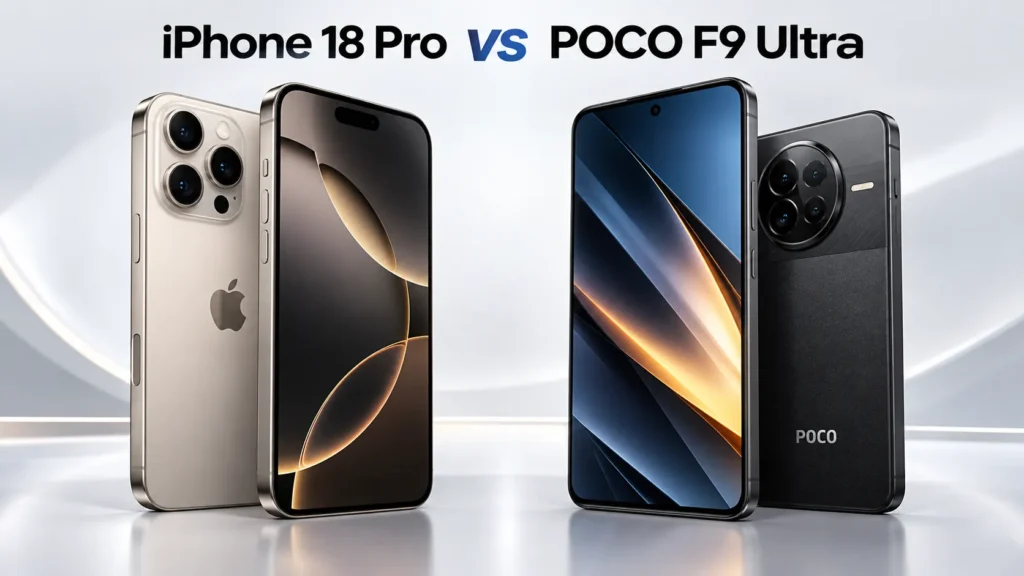
iPhone 18 Pro vs POCO F9 Ultra: Which Flagship Is Better?
The iPhone 18 Pro vs POCO F9 Ultra comparison is one of the most interesting flagship matchups of 2026 because these two phones approach the premium smartphone market from very different directions.
The iPhone 18 Pro is Apple’s latest Pro flagship, built around the iOS ecosystem, A20 Pro silicon, advanced computational photography, professional video tools and long-term software integration. The POCO F9 Ultra, meanwhile, takes the performance-first Android route, combining Snapdragon 8 Elite Gen 5 hardware, an unusually fast 185Hz AMOLED display, an 8,050mAh battery and 100W charging.
So while both are premium phones, they are not designed around exactly the same priorities. Apple’s focus is tightly integrated hardware and software, camera and video quality, AI and ecosystem features. POCO is chasing maximum hardware capability, gaming performance, battery capacity and charging speed.
iPhone 18 Pro vs POCO F9 Ultra: Quick Comparison
| Feature | iPhone 18 Pro | POCO F9 Ultra |
|---|---|---|
| Launch date | September 2026 | September 1, 2026 |
| Starting price | $1,199 / £1,199 / ₹1,64,900 | From €1,099.90 RRP in Europe; launch pricing varies |
| Display | 6.3-inch Super Retina XDR OLED | 6.9-inch AMOLED |
| Refresh rate | Up to 120Hz ProMotion | Up to 185Hz |
| Processor | Apple A20 Pro | Snapdragon 8 Elite Gen 5 |
| RAM | 12GB class configuration | 12GB/16GB |
| Storage | 256GB–2TB | 256GB–1TB |
| Main camera | 48MP variable-aperture | 200MP OIS |
| Telephoto | 48MP 4x / optical-quality 8x | 50MP 5x periscope OIS |
| Ultra-wide | 48MP | 50MP |
| Battery | Apple does not publish mAh capacity | 8,050mAh |
| Wired charging | Up to 50% in ~15 min with 60W+ adapter | 100W |
| Wireless charging | MagSafe/Qi2 up to 25W | 50W |
| OS | iOS 27 | HyperOS 3 / Android 16 |
| Water resistance | IP68 | IP68 |
| Best suited for | Cameras, video, ecosystem, long-term iOS use | Gaming, battery, charging and hardware value |
Apple confirms that the iPhone 18 Pro uses a 6.3-inch 2622×1206 OLED display with adaptive 120Hz ProMotion, A20 Pro, 48MP cameras and IP68 protection. POCO lists the F9 Ultra with a 6.9-inch 2608×1200 AMOLED panel, 185Hz refresh rate, Snapdragon 8 Elite Gen 5, up to 16GB RAM and 1TB storage.
📌 Read more:
- Best Smartphones for Students in 2026: Battery, Performance, Camera and Value
- Xiaomi 18 Pro vs Xiaomi 18 Pro Max: Price, Specifications, Features and Full Review
- Apple Event iPhone 18 Pro and iPhone 18 Pro Max, iPhone Duo & Apple Watch Series 12, Apple Watch Ultra 4 and AirPods 5.
- POCO F9 Ultra Price, Specifications, Features and Full Review
- Best Camera Phones 2026: Top 5 Phones for Photography and Video
- Best Phones With 8000mAh Battery in 2026
iPhone 18 Pro vs POCO F9 Ultra Price and Availability
The iPhone 18 Pro starts at $1,199 in the US with 256GB storage. In the UK, Apple lists the phone from £1,199, while Indian pricing starts at ₹1,64,900 for 256GB. Apple has confirmed pre-orders from September 12 and availability from September 18, 2026.
POCO’s pricing is considerably more complicated because regional pricing and launch promotions differ. Xiaomi’s European terms list the F9 Ultra at €1,099.90 RRP for 12GB/256GB, €1,199.90 for 16GB/512GB and €1,399.90 for 16GB/1TB. Early-bird prices were substantially lower at €829.90, €899.90 and €1,199.90 respectively.
There is also an important point for Indian buyers: the POCO F9 Ultra is not currently officially available in India. Android Central reports that India is among the markets where the phone is not launching, despite POCO’s strong presence there. Therefore, Indian buyers should not treat imported listings as official Indian pricing or availability.
Read: Xiaomi Redmi Note 17 Pro (Global): Price, Specs & Full Review
Design and Build Quality
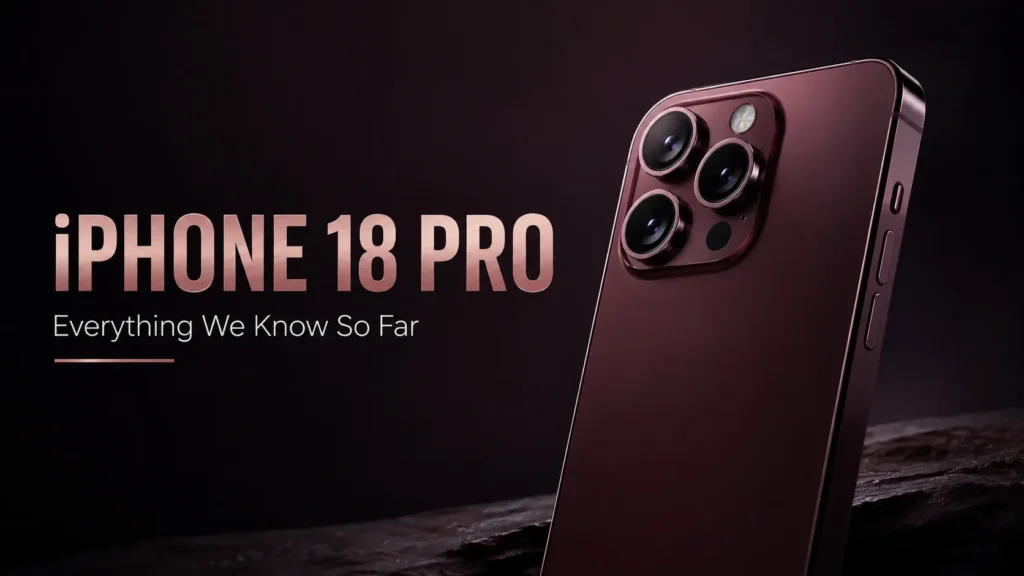
The iPhone 18 Pro uses an aluminium unibody design with Ceramic Shield 2 on the front and Ceramic Shield on the back. It measures 150 × 71.9 × 8.75mm and weighs 211g. Apple offers Black, Silver, Glacier and Burgundy finishes.
The POCO F9 Ultra takes a different approach. It combines a micro-curved metal frame with a fibreglass-style rear panel and comes in Black and Dark Cherry. Official specifications put it at roughly 163.5mm tall and 235g, making it substantially larger and heavier than the iPhone 18 Pro. It also carries IP68 protection.
That weight difference matters. The POCO’s larger battery, cooling hardware and 6.9-inch screen make it a better fit for two-handed gaming and media consumption, while the iPhone is easier to manage for users who prefer a smaller flagship.
Winner: iPhone 18 Pro for premium compact design and ergonomics; POCO F9 Ultra for big-screen durability and hardware value.
Read: Best Phones for BGMI & Free Fire in 2026
Display Comparison
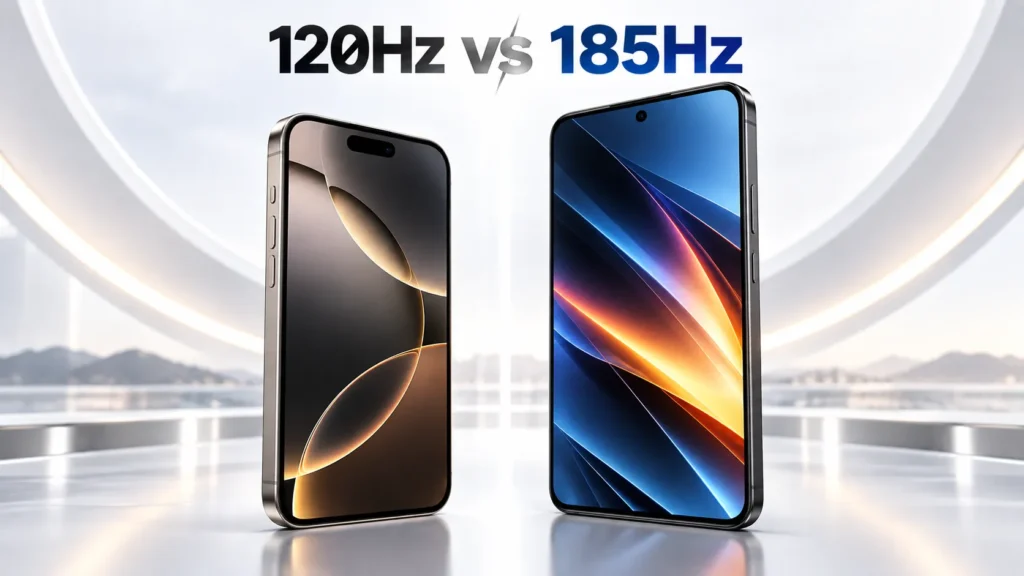
The iPhone 18 Pro has a 6.3-inch Super Retina XDR OLED panel with 2622×1206 resolution, 460ppi, Always-On functionality, HDR, P3 colour, True Tone and adaptive ProMotion up to 120Hz. Apple rates it at up to 3,000 nits outdoor peak brightness.
POCO goes aggressively in the opposite direction. Its F9 Ultra features a 6.9-inch 185Hz AMOLED display with 2608×1200 resolution, up to 4,500 nits in its high-brightness specification and 10,000-nit peak brightness over a 1% display area. It also supports up to 480Hz touch sampling in supported games.
The 185Hz figure is impressive, but it should not automatically be interpreted as a universally smoother display. Android Authority notes that only around 20 games initially support the 185Hz experience and that the system UI itself does not simply operate at 185Hz everywhere.
For gaming, POCO clearly has the more aggressive specification. For colour consistency, adaptive refresh behaviour and a polished all-round viewing experience, Apple’s display remains extremely competitive.
Display winner: POCO F9 Ultra for gaming and refresh rate; iPhone 18 Pro for overall display refinement.
Performance: A20 Pro vs Snapdragon 8 Elite Gen 5
The iPhone 18 Pro is powered by Apple’s A20 Pro, featuring a six-core CPU, seven-core GPU with Neural Accelerators, hardware ray tracing and a dual 16-core Neural Engine. Apple also redesigned the thermal architecture with a larger next-generation vapour chamber, claiming up to 40% higher sustained performance than the previous Pro generation.
The POCO F9 Ultra uses Qualcomm’s Snapdragon 8 Elite Gen 5, manufactured on a 3nm process, with two prime cores reaching 4.6GHz, six performance cores and an Adreno GPU. It also adds the VisionBoost D8 graphics chip for features such as frame interpolation and graphical enhancement. POCO reports an AnTuTu V11 score of 4,165,108.
The important distinction is between peak and sustained performance. The POCO has excellent gaming-oriented hardware, but independent reviews have reported heat and throttling during prolonged heavy loads. Android Central specifically found overheating during gaming, while other reviews praised its overall performance.
Performance verdict: The iPhone 18 Pro is the safer choice for consistently high-end performance across apps, video and AI workloads. POCO is exceptionally strong for gaming and gives users substantially more RAM and aggressive graphics hardware.
iPhone 18 Pro vs POCO F9 Ultra Camera Comparison
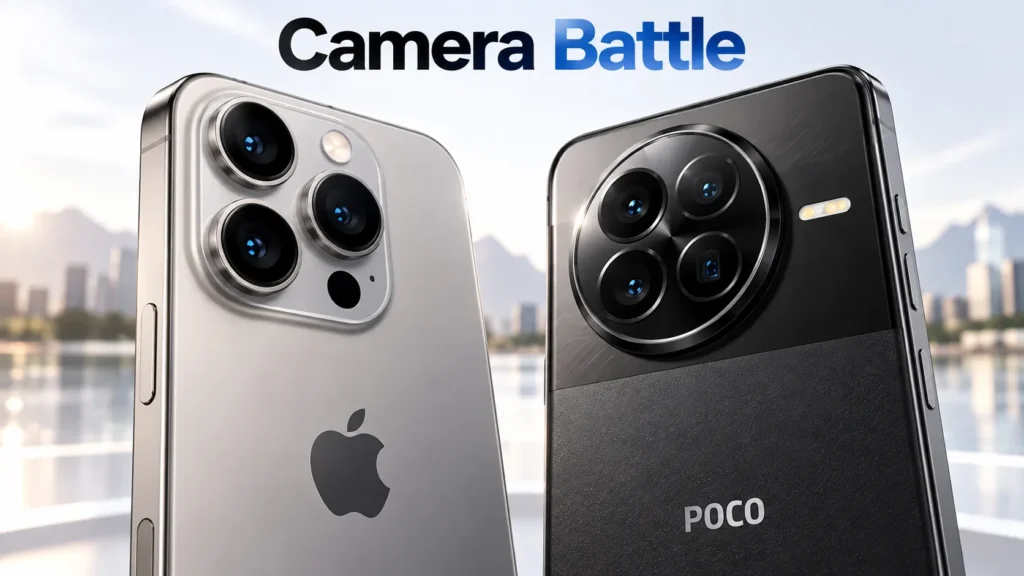
On paper, the POCO F9 Ultra appears to win the megapixel battle with a 200MP main camera, 50MP 5x periscope telephoto and 50MP ultra-wide. The main and telephoto cameras have OIS.
But megapixels do not determine camera quality by themselves.
The iPhone 18 Pro has three 48MP cameras: a variable-aperture main camera ranging from f/1.48 to f/4, a 48MP ultra-wide and a 48MP telephoto system with 4x optical and up to 8x optical-quality telephoto reach. It also includes sensor-shift stabilisation, Pro controls, Photonic Engine, Smart HDR 5, ProRAW and advanced computational photography.
The variable aperture is particularly interesting because it gives the iPhone genuine hardware control over how much light reaches the sensor and how much of a scene remains in focus. Apple’s camera app also provides manual controls for aperture, shutter speed, white balance and histogram.
Independent POCO reviews generally agree that the F9 Ultra’s camera hardware is capable, but its image processing can be heavier than the best premium competitors. Digital Camera World praised its overall camera capability while noting that software polish remains behind the very best flagship phones.
Camera winner: iPhone 18 Pro, particularly for consistent processing, portraits, low-light photography and video. POCO is highly competitive for hardware-focused photography and long-range shooting.
Read: Best ANC Earbuds of 2026: Top 5 Noise Cancelling Wireless Earbuds Compared
Video Recording: iPhone 18 Pro vs POCO F9 Ultra
This is one of the clearest victories for Apple.
The iPhone 18 Pro supports 4K Dolby Vision up to 120fps, Cinematic mode up to 4K/60fps, Action mode, ProRes up to 4K/120fps with external recording, ProRes RAW, Apple Log 2, Genlock, spatial video, advanced stabilisation and four studio-quality microphones.
POCO supports up to 8K/30fps from its rear camera system and has strong stabilisation and AI-assisted imaging features. However, independent reviews have described its video quality as a weaker area compared with its photography and performance.
The distinction is simple: 8K sounds more impressive on a specification sheet, but professional video depends on stabilisation, dynamic range, autofocus, colour science, microphones, codecs and editing workflows.
Video winner: iPhone 18 Pro by a substantial margin.
Battery Life and Charging
POCO’s 8,050mAh battery is one of the F9 Ultra’s biggest advantages. It supports 100W wired HyperCharge and 50W wireless charging, while POCO claims up to two days of battery life.
Apple does not publish the iPhone 18 Pro’s battery capacity, but it rates the phone for up to 34 hours of video playback and 31 hours of streamed video. The phone can reach 50% in around 15 minutes with a 60W-capable adapter. MagSafe and Qi2 wireless charging reach up to 25W.
Independent testing of the F9 Ultra has been particularly positive about endurance, with Android Central reporting that its huge battery can comfortably stretch toward two days.
Still, battery capacity alone is not a battery-life test. Apple’s smaller battery benefits from highly integrated hardware and software efficiency.
Battery winner: POCO F9 Ultra for capacity and endurance; iPhone remains highly efficient.
Charging winner: POCO F9 Ultra. Its 100W wired and 50W wireless charging are considerably more aggressive than Apple’s 60W-capable wired charging and 25W wireless charging.
📌 Read more:
- Apple Event iPhone 18 Pro and iPhone 18 Pro Max, iPhone Duo & Apple Watch Series 12, Apple Watch Ultra 4 and AirPods 5.
- Apple iPhone 17 Series Features & Price in India 2025-26
- Best Camera Phones 2026: Top 5 Phones for Photography and Video
- Best Camera Phones Under ₹30K in 2026: Real Camera Comparison
- Best Phone Under ₹15000 in India (2026) – Top 10 Budget Picks
- Best Phones for BGMI & Free Fire in 2026: Smooth FPS, Zero Lag & Best Gaming Experience
Software and AI
The iPhone 18 Pro runs iOS 27 and introduces Apple’s next generation of Apple Intelligence, including the new Siri AI experience. Apple also integrates AI across system features while emphasising privacy and on-device processing.
Apple’s wider ecosystem remains difficult to replicate. AirDrop, iCloud, FaceTime, Apple Watch, Mac continuity, iPad integration and other services can make the iPhone considerably more convenient for users already invested in Apple hardware.
POCO ships with HyperOS 3 based on Android 16, offering extensive customisation, multitasking and gaming-oriented features. Its AI features include image and productivity tools, although availability can vary by region and software version.
For long-term ownership, Apple also has the stronger reputation for sustained software support. One independent comparison lists POCO at four major Android updates, which is a meaningful consideration for someone keeping a phone for many years.
Software winner: iPhone 18 Pro.
AI and On-Device Intelligence
| AI Area | iPhone 18 Pro | POCO F9 Ultra |
|---|---|---|
| Generative AI | Apple Intelligence | Xiaomi/Google AI features |
| Writing tools | Supported | Region/software dependent |
| Image editing | Apple Intelligence features | AI image tools |
| Voice assistant | Siri AI | Google/Xiaomi assistant features |
| On-device AI | Dual 16-core Neural Engine | Snapdragon AI Engine + VisionBoost |
| Translation | Apple Intelligence features | Google/Xiaomi features |
| AI photography | Advanced computational photography | AI imaging and VisionBoost |
The iPhone has a clear hardware advantage in Apple’s tightly integrated AI stack. Its A20 Pro contains a dual 16-core Neural Engine, while Apple says the new chip doubles AI processing capability over the previous generation.
The POCO is no slouch: Snapdragon’s AI Engine and the dedicated VisionBoost D8 chipset enable graphics enhancement, frame interpolation and other AI-assisted workloads.
AI winner: iPhone 18 Pro for integrated everyday AI; POCO is particularly interesting for AI-assisted gaming and graphics.
Gaming Comparison
Gaming is where the POCO F9 Ultra makes its strongest case.
It combines Snapdragon 8 Elite Gen 5, a dedicated VisionBoost D8 graphics processor, 185Hz refresh rate, up to 480Hz touch sampling, 4,800Hz instant touch sampling in supported scenarios, large battery capacity and 100W charging. POCO also says its 185FPS ecosystem covers more than 20 games.
Independent testing does reveal an important caveat: prolonged gaming can generate substantial heat, and reviewers have observed throttling in demanding workloads.
The iPhone 18 Pro remains a powerful gaming phone, benefiting from A20 Pro, hardware ray tracing and improved thermal management. Apple’s gaming ecosystem is also mature, particularly for premium titles.
Gaming winner: POCO F9 Ultra, especially for gamers who value a huge screen, high refresh rate, large battery and fast charging.
Audio and Connectivity
The POCO F9 Ultra has one of the most unusual audio systems in this comparison: symmetrical stereo speakers with a dedicated subwoofer, developed with Bose. POCO describes it as a 2.1-channel system, and independent reviewers have praised its sound quality.
Both phones support modern 5G, Wi-Fi 7 and Bluetooth 6. The POCO also includes an IR blaster, while Apple’s ecosystem adds features such as satellite emergency services, Ultra Wideband and tight integration with other Apple hardware.
Audio winner: POCO F9 Ultra. Connectivity winner: a tie, depending on ecosystem requirements.
Which Phone Is Better for Different Users?
Best for the iPhone ecosystem: iPhone 18 Pro
If you already use a Mac, iPad, Apple Watch or AirPods, the iPhone’s integration is a major advantage.
Best for gaming: POCO F9 Ultra
The 185Hz display, Snapdragon 8 Elite Gen 5, VisionBoost graphics hardware, huge battery and 100W charging make it the more gaming-focused device.
Best for photography: iPhone 18 Pro
POCO’s 200MP main camera and 5x telephoto are impressive, but Apple’s computational photography, variable aperture and camera consistency give the iPhone the edge.
Best for video: iPhone 18 Pro
ProRes, Apple Log 2, Dolby Vision, 4K/120fps and professional controls make the iPhone the obvious choice for creators.
Best battery and charging: POCO F9 Ultra
The 8,050mAh battery and 100W/50W charging combination is difficult for the iPhone to match.
Best display for gaming: POCO F9 Ultra
Its 185Hz panel and high touch-sampling capabilities are designed with gamers in mind.
Best overall display: iPhone 18 Pro
Its 120Hz ProMotion panel may have a lower headline refresh rate, but Apple’s OLED calibration, adaptive refresh, HDR and outdoor visibility make it an excellent all-round display.
Best value: POCO F9 Ultra
At launch pricing, the POCO offers substantially more hardware per dollar/euro. However, its value proposition becomes less dramatic at full European RRP.
Best for long-term ownership: iPhone 18 Pro
Apple’s software ecosystem, resale strength and long-term update reputation make the iPhone the safer choice for extended ownership.
iPhone 18 Pro: Pros and Cons
Pros
- Excellent A20 Pro performance
- Strong sustained-performance architecture
- 48MP triple-camera system
- Variable-aperture main camera
- Outstanding professional video features
- Apple Intelligence and Siri AI
- Excellent ecosystem integration
- IP68 protection
- Strong long-term ownership proposition
Cons
- Much more expensive in many markets
- Slower charging than POCO
- Smaller battery capacity
- 120Hz maximum refresh rate versus POCO’s 185Hz
- Some Apple AI features can vary by region
POCO F9 Ultra: Pros and Cons
Pros
- Snapdragon 8 Elite Gen 5
- 8,050mAh battery
- 100W wired charging
- 50W wireless charging
- 6.9-inch 185Hz AMOLED
- 200MP main camera
- 50MP 5x periscope camera
- Excellent gaming hardware
- Bose 2.1 audio system
- IP68 protection
- Excellent hardware value at promotional pricing
Cons
- Heavy at around 235g
- Prolonged gaming can produce heat and throttling
- Video quality is not as strong as the iPhone
- HyperOS may not appeal to everyone
- Software support is shorter than Apple’s
- Not officially launched in India
- Full European RRP is considerably higher than its early-bird pricing
iPhone 18 Pro vs POCO F9 Ultra: Which Flagship Should You Buy?
The answer depends heavily on what you value.
Choose iPhone 18 Pro if:
- You prefer iOS
- You already own Apple devices
- Video recording is a major priority
- You want the strongest overall camera experience
- You value Apple Intelligence and ecosystem integration
- You want a relatively compact premium flagship
- Long-term software support and resale value matter
Choose POCO F9 Ultra if:
- Gaming is a top priority
- You want the largest possible battery
- Fast charging matters
- You want a 185Hz display
- You want 5x optical telephoto hardware
- You want flagship-level specifications without paying Apple’s premium
- You value powerful Android hardware over ecosystem integration
Overall Winner
There isn’t one universal winner.
The iPhone 18 Pro is the better choice for photography, video, software integration, AI, ecosystem features and long-term ownership. Its camera and video system in particular give it a meaningful advantage for creators.
The POCO F9 Ultra is the better choice for gaming, battery capacity, charging speed, display refresh rate and hardware value. Its 8,050mAh battery, 100W charging, 185Hz AMOLED and Snapdragon 8 Elite Gen 5 make it one of the most aggressively equipped Android flagships of 2026.
For most buyers who simply want the most polished premium smartphone experience, the iPhone 18 Pro is the safer overall recommendation. For enthusiasts who prioritise specifications, gaming and charging above all else, the POCO F9 Ultra is the more exciting buy.
📌 Read more:
- Xiaomi Redmi Note 17 Pro (Global): Price, Specs & Full Review
- Xiaomi 18 Pro vs Xiaomi 18 Pro Max: Price, Specifications, Features and Full Review
- Xiaomi 17T Review: 5x Leica Zoom Cameras, 6500mAh Battery
- Xiaomi 17 vs iPhone 17 – कौन Best है? Full Comparison 2026
- Xiaomi 17 Series, Launch Date 2026, Price, Specs & Features
- Vivo V60e 5G: 200MP Camera, Top 6500mAh Battery at ₹29,999
Frequently Asked Questions
Q1. Is iPhone 18 Pro better than POCO F9 Ultra?
A1. For overall camera, video, software integration and ecosystem experience, yes. The POCO F9 Ultra is stronger for gaming-focused hardware, battery capacity and charging speed. The better phone therefore depends on priorities rather than specifications alone.
Q2. Which has the better camera?
A2. The iPhone 18 Pro is the stronger overall camera phone. Its 48MP variable-aperture main camera, advanced computational photography, 48MP ultra-wide and 48MP telephoto system provide a more sophisticated package. POCO counters with a 200MP main camera and 50MP 5x periscope, which are impressive for photography-focused users.
Q3. Which is faster?
A3. Both are extremely fast. The iPhone 18 Pro uses Apple’s A20 Pro, while the POCO uses Snapdragon 8 Elite Gen 5. Apple has a strong advantage in tightly integrated CPU, GPU and AI performance, while POCO is particularly optimised for sustained gaming and graphics workloads.
Q4. Which has better battery life?
A4. The POCO F9 Ultra has the much larger 8,050mAh battery and independent reviews have praised its endurance. However, battery capacity does not directly equal battery life. Apple’s hardware/software optimisation allows the iPhone 18 Pro to deliver strong endurance from a much smaller battery.
Q5. Which charges faster?
A5. The POCO F9 Ultra wins decisively. It supports 100W wired and 50W wireless charging. The iPhone 18 Pro can reach 50% in around 15 minutes with a compatible 60W-capable adapter, while MagSafe and Qi2 charging reach up to 25W.
Q6. Which has the better display?
A6. The POCO has the more aggressive gaming display, with a 185Hz maximum refresh rate and a 6.9-inch AMOLED panel. The iPhone 18 Pro has a 6.3-inch OLED with adaptive 120Hz ProMotion, excellent brightness and colour accuracy. For gaming choose POCO; for overall refinement, the iPhone is stronger.
Q7. Which is better for gaming?
A7. The POCO F9 Ultra is the better gaming-focused phone. Snapdragon 8 Elite Gen 5, VisionBoost D8, 185Hz refresh rate, high touch sampling, large battery and 100W charging create a compelling gaming package. Prolonged heavy workloads can generate heat, however.
Q8. Which has better video recording?
A8. The iPhone 18 Pro is substantially better for video. It supports 4K Dolby Vision up to 120fps, ProRes, ProRes RAW, Apple Log 2, Genlock and professional controls. The POCO supports impressive 8K recording, but independent reviewers have generally found its video processing less polished.
Q9. Is POCO F9 Ultra available in India?
A9. No. As of September 2026, the POCO F9 Ultra has not been officially launched in India. It is available in selected global markets, so Indian buyers should be cautious with imported listings and should not assume that an unofficial listing represents official Indian pricing or warranty coverage.
Q10. Which phone offers better value in 2026?
A10. The POCO F9 Ultra offers better hardware value, especially at its introductory prices. However, its full European RRP is much closer to traditional flagship territory. The iPhone 18 Pro costs more but justifies part of that premium through its camera, video, software, ecosystem and long-term ownership advantages.
Disclaimer: Product prices, features, and specifications mentioned on this website may change without notice. Please check the official brand website or trusted retailers for the latest updates before making any purchase.
Related Posts
- Best Smartphones for Students in 2026: Battery, Performance, Camera and Value

- Xiaomi 18 Pro vs Xiaomi 18 Pro Max: Price, Specifications, Features and Full Review
- Apple Event iPhone 18 Pro and iPhone 18 Pro Max, iPhone Duo & Apple Watch Series 12, Apple Watch Ultra 4 and AirPods 5.
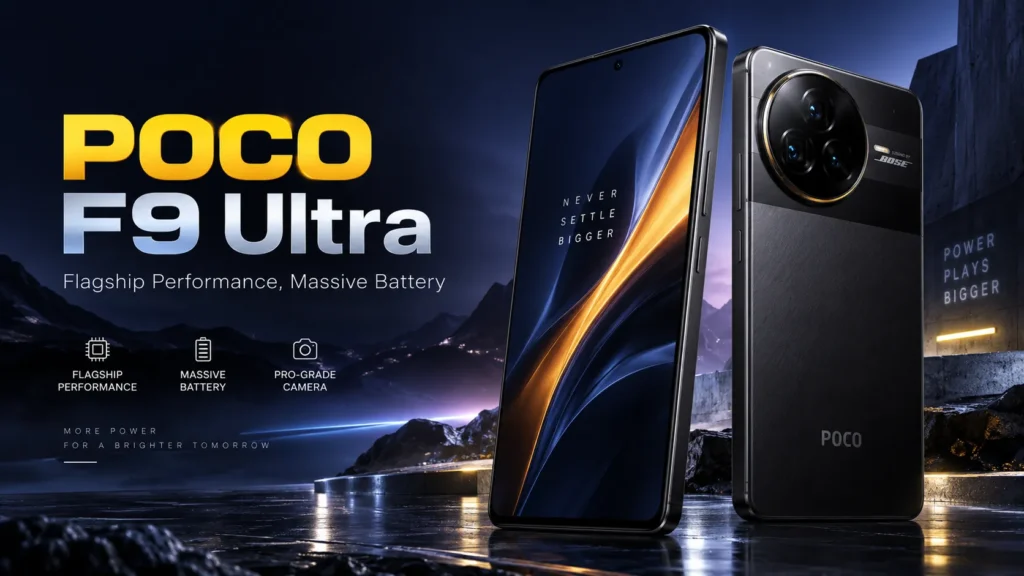
- POCO F9 Ultra Price, Specifications, Features and Full Review
- Best Camera Phones 2026: Top 5 Phones for Photography and Video
- Best Phones With 8000mAh Battery in 2026
- Google Pixel 11 vs Pixel 11 Pro vs Pixel 11 Pro Fold: Which Pixel Should You Buy?
- iPhone 18 Pro Everything We Know So Far About Apple iPhone 18 Pro 2026
Latest Phone
- Lava Virat Curve 5G
 ₹20,999
 - OnePlus N6 Lite 4G
 ₹16,999
 - AI+ Nova 2 Power 5G
 ₹16,999
 - Google Pixel 11
 ₹89,999

Wasiur Rehman is a content writer with a focus on technology and automobiles, covering smartphones, gadgets, EVs, and car-related updates. He writes clear and informative articles designed to help readers stay updated with the latest launches, features, and industry developments.