
Buying a smartphone as a student is not always about getting the fastest processor or the most expensive camera. A good student phone needs to handle the things you actually do every day – attending online classes, reading PDFs, taking notes, watching lectures, joining video calls, browsing the web, using social media and, for many students, playing games after studying.
A phone with a huge battery may be great for long college days, but it may not have the performance you need for demanding apps. A powerful gaming phone may run intensive games smoothly, but its camera or software experience may not be ideal for everyday use. And paying for a flagship phone does not always make sense if your main requirements are Google Classroom, YouTube, WhatsApp, documents and video calls.
That is why the best smartphones for students in 2026 depends on how you plan to use it.
In this guide, we look beyond processor names, megapixel counts and RAM numbers. We compare smartphones based on the features that matter in real student life – battery life, performance, display quality, cameras, storage, software support, durability and overall value.
Whether you are a college student attending online classes, a CSE student who needs more performance, a content creator who prioritizes cameras, or a gamer looking for a phone that can handle demanding games, this guide will help you find the right type of smartphone for your needs and budget.
Quick Picks: Best Student Smartphones in 2026
| Category | Smartphone | Why It Fits Students |
|---|---|---|
| Best Overall | Google Pixel 10a | Balanced software, camera, display and long-term support |
| Best Battery | realme NARZO 100x 5G | 8,000mAh battery and 45W charging |
| Best for Online Classes | Samsung Galaxy A57 5G | Large 120Hz display, speakers, battery and front camera |
| Best for Productivity | iPhone 17e | Strong A19 performance, 256GB base storage and mature productivity ecosystem |
| Best Camera | iPhone 18 Pro | 48MP camera system, OIS and advanced video features |
| Best Gaming | TECNO POVA 7 5G | Dimensity 7300 Ultimate, 144Hz display and 6,000mAh battery |
| Best Budget | OPPO K14x 5G | 120Hz display, 6,500mAh battery and 45W charging |
📌 Read more:
- Best Smartphones for Students in 2026: Battery, Performance, Camera and Value
- Xiaomi 18 Pro vs Xiaomi 18 Pro Max: Price, Specifications, Features and Full Review
- Apple Event iPhone 18 Pro and iPhone 18 Pro Max, iPhone Duo & Apple Watch Series 12, Apple Watch Ultra 4 and AirPods 5.
- POCO F9 Ultra Price, Specifications, Features and Full Review
- Best Camera Phones 2026: Top 5 Phones for Photography and Video
- Best Phones With 8000mAh Battery in 2026
Best Overall Student Smartphone: Google Pixel 10a

For a student who wants one phone for studying, communication, photography, entertainment and everyday use, the Pixel 10a offers a particularly practical specification mix.
It has a 6.3-inch pOLED display with a 60–120Hz refresh rate, 8GB RAM, 256GB storage and a 5,100mAh battery. Google also lists 30+ hours of battery life and up to 120 hours with Extreme Battery Saver.
The Tensor G4 processor provides enough headroom for everyday multitasking, learning applications, social media and demanding apps. Its clean Android experience and long update commitment are also useful for students who expect to keep their phone for several years. Independent listings report seven years of OS and security updates.
India price: around ₹52,999 on the Google Store at the time of research, although offers can change.
The main reason to consider it is balance. Students do not have to pay flagship prices simply to get a good display, camera, software experience and storage.
Read: Xiaomi Redmi Note 17 Pro (Global): Price, Specs & Full Review
Best Smartphone for Battery Life: realme NARZO 100x 5G
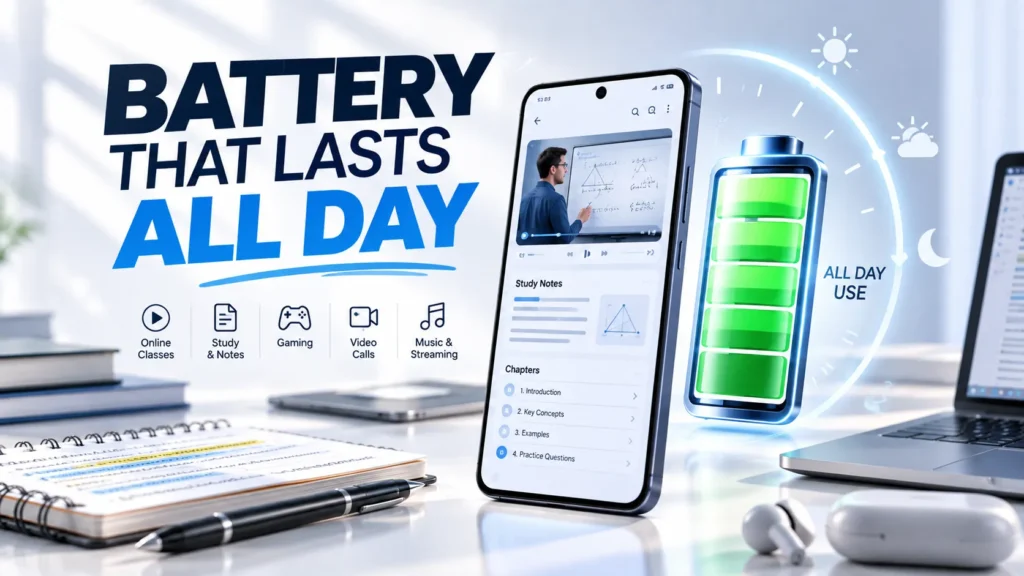
Battery life can matter more to a student than raw processing power. A phone may spend hours connected to mobile data, video calls, YouTube, navigation and social media between classes.
The realme NARZO 100x 5G takes a straightforward approach with an 8,000mAh battery and 45W charging. Its 6.8-inch display supports a 144Hz refresh rate, while the Dimensity 6300 handles everyday applications.
The large battery does not automatically guarantee the longest real-world endurance because processor efficiency, display brightness, network conditions and software all affect consumption. Nevertheless, the capacity gives the phone a substantial hardware advantage for students who spend long days away from a charger.
The compromises are also worth understanding. The display is LCD rather than OLED, and the base configuration has only 4GB RAM. Students who multitask heavily should consider a higher-memory configuration.
India price: approximately ₹19,667 for the 4GB/128GB version in recent listings, with prices varying by retailer and configuration.
Read: Best Phones for BGMI & Free Fire in 2026
Best Smartphone for Online Classes: Samsung Galaxy A57 5G
For online classes, a phone should be comfortable to look at for extended periods. A large display, reliable connectivity, speakers, front camera and battery are more important than having the fastest gaming processor.
The Galaxy A57 5G combines a 6.7-inch 120Hz Super AMOLED Plus display with 5G, 256GB storage and a 5,000mAh battery. It also has a 12MP front camera and stereo speakers.
That makes it suitable for Google Meet, Zoom, Microsoft Teams, Google Classroom and YouTube-based learning. The high-refresh-rate display can also make scrolling through notes and web pages feel smoother.
Independent review information describes the speakers and display positively while noting that performance is in the mid-range rather than flagship class.
India price: around ₹56,999 for the 8GB/256GB configuration in September 2026 listings.
Best Smartphone for Notes and Productivity: iPhone 17e
Productivity is not only about RAM. Software support, storage, document apps, cloud services, keyboard quality and overall responsiveness matter too.
The iPhone 17e starts with 256GB storage and uses Apple’s A19 chip. It supports Apple Intelligence, USB-C, FaceTime, screen sharing and a range of productivity and communication features.
For students using Google Docs, Microsoft 365, OneNote, Notion, cloud storage and communication apps, the combination of strong processing performance and 256GB base storage is useful.
The 6.1-inch OLED display is smaller than some Android alternatives, so students who read very large documents on the phone may prefer a bigger screen.
India price: Apple currently lists the 256GB iPhone 17e at ₹79,900, although the original launch price was ₹64,900. This illustrates why current retail pricing should always be checked before publication.
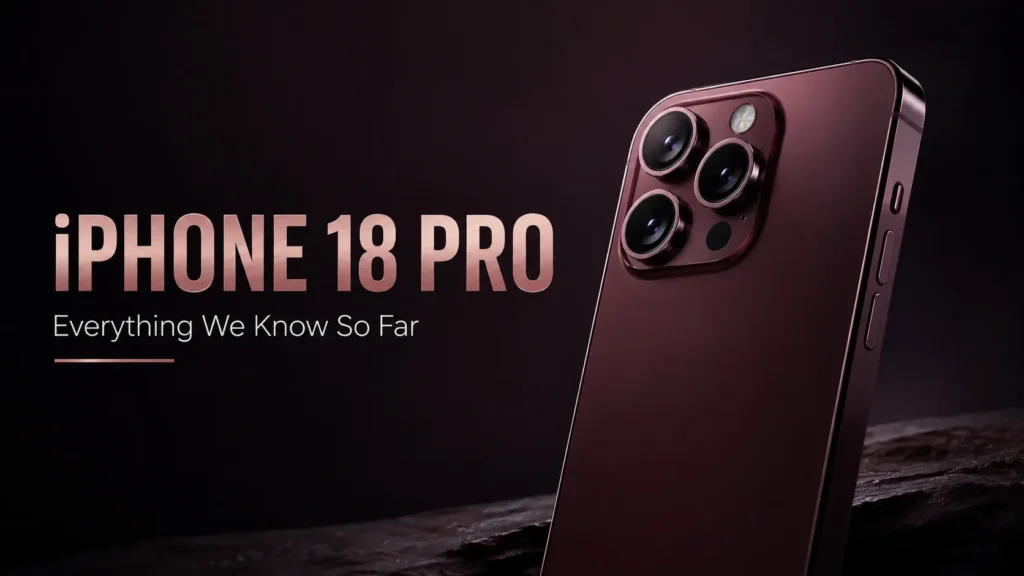
Best Camera Smartphone for Students: iPhone 18 Pro
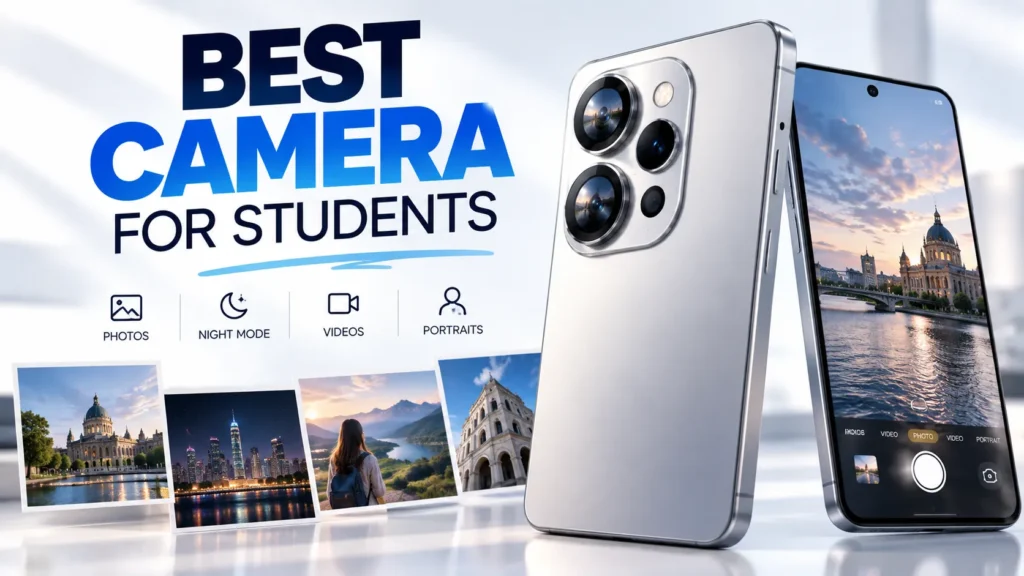
Students who regularly photograph events, projects, notes, trips or social-media content may benefit from investing more in the camera system.
The iPhone 18 Pro has three 48MP rear cameras: a main camera with variable aperture, an ultrawide camera and a telephoto camera. The main camera also has second-generation sensor-shift optical image stabilization.
Video is another major strength on paper, with 4K Dolby Vision recording, ProRes options and an 18MP Center Stage front camera designed for photos and video calls.
This is a good example of why megapixel count alone is not enough. Stabilization, sensor design, lenses, autofocus and image processing all influence the final result.
The iPhone 18 Pro is expensive, so its camera capabilities make more sense for students who actually create photography or video content rather than someone who mainly takes occasional classroom photos.
Best Gaming Smartphone for Students: TECNO POVA 7 5G
A gaming phone still needs to function as a normal student phone. The POVA 7 5G combines a MediaTek Dimensity 7300 Ultimate processor with 8GB RAM, a 144Hz FHD+ display and a 6,000mAh battery. It also supports 45W charging.
Those specifications give it a gaming-oriented hardware profile while leaving enough capacity for everyday apps, classes, streaming and social media.
Independent 91mobiles testing reports an AnTuTu score of 676,261, but benchmark numbers should not be treated as a guarantee of performance in every game. Actual frame rates can change with graphics settings, thermals and game optimization.
India price: recent listings start around ₹13,699, although availability varies.
Best Budget Smartphone for Students: OPPO K14x 5G
The OPPO K14x 5G is aimed at students who need a large display and long battery life without moving into premium pricing.
It has a 6.75-inch 120Hz LCD display, Dimensity 6300 processor, 6,500mAh battery and 45W charging. OPPO also advertises up to 48-month fluency protection.
The phone is particularly suitable for browsing, YouTube, communication, online learning and normal daily use. The 50MP main camera is adequate on paper, but students who prioritize photography should look higher in the range.
India price: approximately ₹17,449 at the low end of current listings, depending on configuration and retailer.
📌 Read more:
- Apple Event iPhone 18 Pro and iPhone 18 Pro Max, iPhone Duo & Apple Watch Series 12, Apple Watch Ultra 4 and AirPods 5.
- Apple iPhone 17 Series Features & Price in India 2025-26
- Best Camera Phones 2026: Top 5 Phones for Photography and Video
- Best Camera Phones Under ₹30K in 2026: Real Camera Comparison
- Best Phone Under ₹15000 in India (2026) – Top 10 Budget Picks
- Best Phones for BGMI & Free Fire in 2026: Smooth FPS, Zero Lag & Best Gaming Experience
Best Student Smartphone by Budget
The right budget depends on how demanding the student’s workload is.
| India Budget | What to Look For |
|---|---|
| Under ₹10,000 | Basic performance, battery and dependable software |
| ₹10,000–₹15,000 | 5G, 6GB/8GB RAM where possible and a good display |
| ₹15,000–₹20,000 | Better performance, battery and cameras |
| ₹20,000–₹30,000 | Stronger all-round performance and storage |
| ₹30,000+ | Better cameras, processors, displays and longer premium features |
The Indian ₹15,000–₹20,000 market is particularly competitive in 2026, with high-refresh displays, 5G and large batteries becoming common.
Do not spend the entire budget simply because the money is available. A phone that handles the student’s actual workload comfortably can be better value than an unnecessarily expensive flagship.
What Specifications Do Students Actually Need?
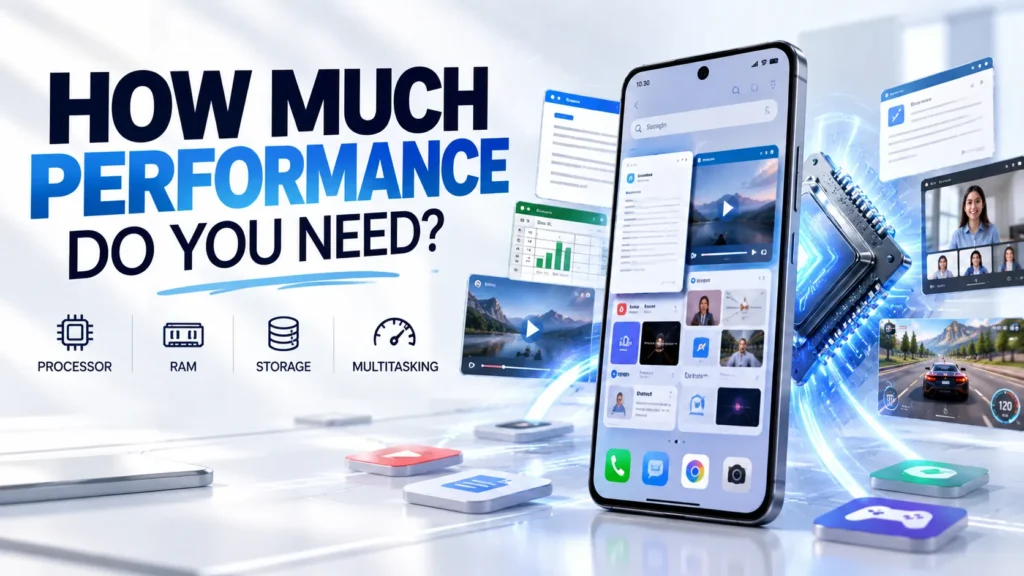
Processor
- For classes, browsing, documents and social media, an entry-level or mid-range processor is normally sufficient.
- Students who edit videos, play demanding games or use heavy applications should consider upper-mid-range or flagship hardware.
- The chipset name matters, but sustained performance, thermal management and software optimization matter too.
RAM
- 6GB: Suitable for basic everyday use.
- 8GB: A sensible target for most students.
- 12GB+: Useful for heavy multitasking and gaming, but not essential for everyone.
- More RAM does not automatically make a phone faster. A well-optimized phone with 8GB RAM can provide a better experience than a poorly optimized phone with more memory.
Storage
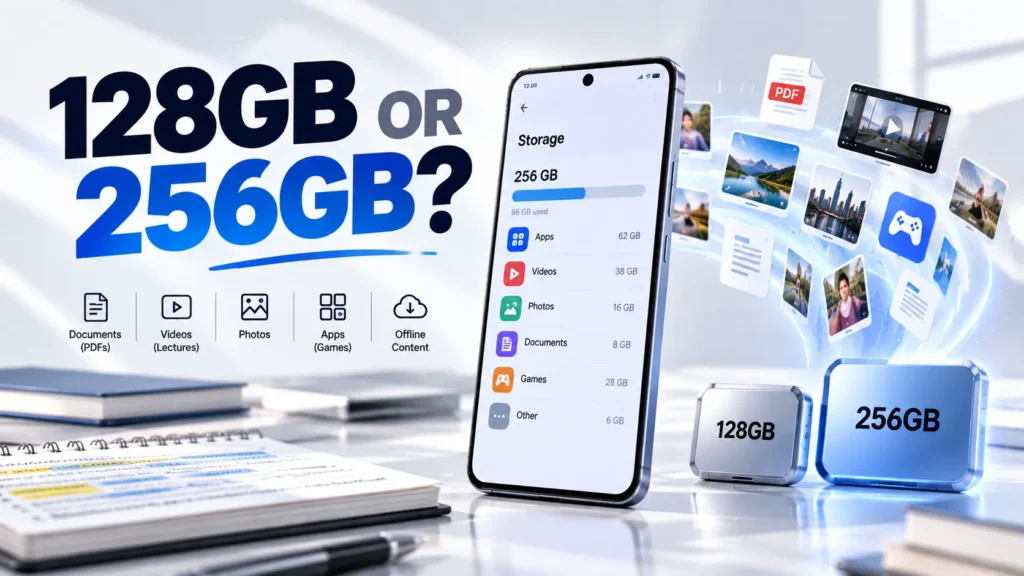
- 128GB: Enough for many students who mainly use cloud storage.
- 256GB: More comfortable for students storing videos, PDFs, games and photos locally.
- 512GB: Useful for heavy video recording, large game libraries and offline content.
- If a student plans to keep the phone for several years, 256GB can provide useful breathing room.
How Much Battery Does a Student Need?
A 5,000mAh battery remains a sensible starting point. Larger 6,000mAh, 7,000mAh and 8,000mAh batteries are useful for students who spend long hours away from chargers.
However, capacity is only one part of battery life. A 5,000mAh phone with an efficient processor and display can outlast a less efficient phone with a larger battery.
Charging speed also matters. 18W is usable, while 33W–67W can make quick top-ups more convenient. 80W or 100W-class charging can be useful for heavy users, but faster charging should not be confused with longer battery life.
What Display Should Students Choose?
For reading, studying and video lessons, display quality can make a noticeable difference.
- LCD: Usually cheaper and can provide good brightness and refresh rates.
- OLED/AMOLED: Offers deeper blacks, stronger contrast and excellent viewing quality.
- A 90Hz or 120Hz screen generally provides smoother scrolling than 60Hz. A 144Hz panel can be useful for gaming, but it is not necessary for reading PDFs or attending classes.
Brightness also matters. A screen that is difficult to see outdoors can be frustrating even if its refresh rate is high.
Camera: What Students Really Need
A student does not automatically need a 200MP camera. Look for:
- A capable main sensor
- Optical image stabilization where available
- A useful ultrawide camera
- Telephoto hardware if photography is important
- A good front camera for calls
- Reliable video recording
- Good image processing
A 50MP camera with a good sensor, stabilization and processing can produce better photographs than a higher-megapixel camera with weaker hardware.
Software and Updates
Students often keep phones for several years, so update support deserves serious attention. Check:
- Android or iOS version
- Guaranteed OS updates
- Security-update period
- Manufacturer’s update policy
- Bloatware
- Privacy controls
- Backup options
- Cloud integration
- AI features
For example, the Pixel 10a is listed with seven years of OS and security updates, while the iPhone 17e is marketed by Apple as offering long-term software support.
Connectivity
- Students should consider 5G, Wi-Fi, Bluetooth and USB-C as basic connectivity factors.
- Wi-Fi 6, Wi-Fi 6E or Wi-Fi 7 can be useful on compatible networks, but not every student needs the newest wireless standard.
- NFC is useful for compatible payments and accessories. eSIM can be convenient for students who travel. Dual SIM can be useful for keeping personal and college/work numbers separate.
- Always check the exact network bands if purchasing an imported smartphone.
Durability and Build Quality
Students carry phones everywhere, so durability matters. Look for:
- IP water/dust resistance
- Strong cover glass
- Reliable frame construction
- Good case availability
- Repair and service availability
An IP rating does not make a phone indestructible. A case and screen protection can still be worthwhile.
Battery vs Performance: What Should Students Prioritize?
| Student Type | Main Priority |
|---|---|
| Online learning | Battery + display + speakers |
| Engineering/CSE student | Performance + RAM + storage |
| Content creator | Camera + storage + performance |
| Gamer | Chipset + GPU + cooling |
| Social media user | Camera + display + battery |
| Budget student | Battery + performance + software support |
This is why there is no single specification that makes a phone perfect for every student.
Common Smartphone Buying Mistakes
- Buying only because of megapixels: Camera quality depends on more than resolution.
- Buying only because of RAM: More memory does not guarantee better optimization.
- Ignoring software updates: A cheaper phone can become less attractive if support ends quickly.
- Choosing insufficient storage: Large games, videos and offline lectures can consume 128GB faster than expected.
- Ignoring battery health and charging: Heavy daily use makes battery behavior important.
- Buying an expensive flagship unnecessarily: A student using Docs, YouTube and video calls may not benefit from flagship hardware.
- Ignoring network compatibility: Imported phones may not support every local band.
- Ignoring warranty and service: Check whether support is available where you live.
- Buying only from launch specifications: Current price, software support and independent testing can change the buying decision.
Should Students Buy a Flagship Phone?
A flagship can make sense for a student who plays demanding games, edits video, takes photography seriously or plans to keep the phone for many years.
It can also provide premium cameras, stronger processors and advanced displays. But a flagship is not required for online classes, notes, browsing, YouTube, social media and normal communication.
A good mid-range phone can handle these tasks comfortably while leaving money available for accessories, a laptop, tablet, courses or other educational expenses.
Best Smartphone for Students: Final Buying Guide
Instead of choosing a phone simply because it has the biggest specifications, match the device to the student’s actual routine.
- Best overall: Google Pixel 10a for a balanced combination of display, software, storage, camera and everyday performance.
- Best battery: realme NARZO 100x 5G for students who prioritize endurance and a large battery.
- Best online classes: Samsung Galaxy A57 5G for its large high-refresh display, speakers, front camera and battery.
- Best productivity: iPhone 17e for its A19 processor, 256GB starting storage and productivity ecosystem.
- Best camera: iPhone 18 Pro for its complete multi-camera system, stabilization and advanced video features.
- Best gaming: TECNO POVA 7 5G for its Dimensity 7300 Ultimate platform, 144Hz display and large battery.
- Best budget: OPPO K14x 5G for its combination of 5G, 120Hz display, 6,500mAh battery and 45W charging.
The most important question is not Which phone has the biggest specifications?, It is Which phone gives this student the features they will actually use every day?
📌 Read more:
- Xiaomi Redmi Note 17 Pro (Global): Price, Specs & Full Review
- Xiaomi 18 Pro vs Xiaomi 18 Pro Max: Price, Specifications, Features and Full Review
- Xiaomi 17T Review: 5x Leica Zoom Cameras, 6500mAh Battery
- Xiaomi 17 vs iPhone 17 – कौन Best है? Full Comparison 2026
- Xiaomi 17 Series, Launch Date 2026, Price, Specs & Features
- Vivo V60e 5G: 200MP Camera, Top 6500mAh Battery at ₹29,999
Best Smartphones for Students in 2026 FAQs
Q1. Which smartphone is best for students in 2026?
A1. There is no universal answer. A balanced model such as the Pixel 10a suits students who want a mixture of camera quality, software, storage and everyday performance, while battery-focused, gaming and photography users may need different hardware.
Q2. How much RAM does a student need?
A2. For most students, 8GB is a comfortable target. 6GB can work for basic use, while 12GB or more is mainly useful for heavier multitasking and gaming.
Q3. Is 8GB RAM enough for students?
A3. Yes. For online classes, documents, browsing, social media, streaming and normal multitasking, 8GB is generally a practical amount.
Q4. How much storage should a student phone have?
A4. 128GB can be enough for light users. 256GB is more comfortable if the student stores videos, games, photos and offline lectures.
Q5. Is a 5,000mAh battery enough for college students?
A5. It can be. Actual endurance depends on the processor, display, brightness, network use, software and workload. Students with particularly heavy usage may prefer 6,000mAh or larger batteries.
Q6. Which phone is best for online classes?
A6. Look for a large, bright display, good speakers, a usable front camera, stable Wi-Fi/5G, good battery life and reliable multitasking rather than focusing only on processor speed.
Q7. Which smartphone is best for gaming and studying?
A7. A gaming-focused mid-range phone can provide a useful balance. The TECNO POVA 7 5G, for example, combines a Dimensity 7300 Ultimate processor, 144Hz display and 6,000mAh battery.
Q8. Should students buy an expensive flagship phone?
A8. Only when the student will use its additional capabilities, such as advanced photography, demanding gaming, video editing or premium hardware. Basic studying does not require flagship specifications.
Q9. Is AMOLED better than LCD for students?
A9. OLED/AMOLED generally provides deeper blacks and higher contrast, while good LCD displays can still be bright and smooth. Display quality depends on the complete panel, not just the technology name.
Q10. How long should a student smartphone last?
A10. A well-supported smartphone can remain useful for several years. When buying, check the manufacturer’s update policy, battery capacity, repair options and storage rather than considering only launch specifications.
Disclaimer: Product prices, features, and specifications mentioned on this website may change without notice. Please check the official brand website or trusted retailers for the latest updates before making any purchase.
Related Posts
- Best Smartphones for Students in 2026: Battery, Performance, Camera and Value
- Xiaomi 18 Pro vs Xiaomi 18 Pro Max: Price, Specifications, Features and Full Review
- Apple Event iPhone 18 Pro and iPhone 18 Pro Max, iPhone Duo & Apple Watch Series 12, Apple Watch Ultra 4 and AirPods 5.
- POCO F9 Ultra Price, Specifications, Features and Full Review
- Best Camera Phones 2026: Top 5 Phones for Photography and Video

- Best Phones With 8000mAh Battery in 2026

- Google Pixel 11 vs Pixel 11 Pro vs Pixel 11 Pro Fold: Which Pixel Should You Buy?

- iPhone 18 Pro Everything We Know So Far About Apple iPhone 18 Pro 2026
Latest Phone
- Lava Virat Curve 5G
 ₹20,999
 - OnePlus N6 Lite 4G
 ₹16,999
 - AI+ Nova 2 Power 5G
 ₹16,999
 - Google Pixel 11
 ₹89,999

Abdul Azeem is a content writer covering automobiles, smartphones, gadgets, and electric vehicles. He writes informative and easy-to-understand articles focused on the latest launches, features, comparisons, and technology updates for everyday readers.