

Q. How to Choose Best Smartphone in 2026?
Buying a new smartphone in 2026 is more challenging than ever. A few years ago, choosing a phone mainly meant comparing the camera, processor, and battery. Today, buyers also have to consider AI features, software updates, display quality, charging speeds, 5G support, and long-term value.
Manufacturers offer dozens of models every year, often with similar specifications but very different user experiences. A phone with a 200MP camera might not necessarily produce better images than one with a 50MP camera. Likewise, a device with more RAM isn’t always faster if its processor is weaker.
Whether you’re a student, gamer, professional, photographer, or someone upgrading from an older phone, this guide will help you understand what really matters before spending your money. Instead of focusing on marketing terms, we’ll explain the features that make a real difference in everyday use.
Best Mobile Buying Guide Checklist
Before purchasing any smartphone, ask yourself these questions.
| Feature | What to Check |
|---|---|
| Budget | Choose a price range first |
| Processor | Powerful enough for your needs |
| Camera | Image quality matters more than megapixels |
| Display | AMOLED with 120Hz is ideal |
| Battery | At least 5,000mAh |
| Software | Long update support |
| Storage | Minimum 128GB |
| RAM | 8GB recommended |
| Build Quality | IP rating and Gorilla Glass |
| Connectivity | 5G, Wi-Fi, Bluetooth, NFC if needed |
📌 Read more:
- Apple Event iPhone 18 Pro and iPhone 18 Pro Max, iPhone Duo & Apple Watch Series 12, Apple Watch Ultra 4 and AirPods 5.
- Apple iPhone 17 Series Features & Price in India 2025-26
- Best Camera Phones 2026: Top 5 Phones for Photography and Video
- Best Camera Phones Under ₹30K in 2026: Real Camera Comparison
- Best Phone Under ₹15000 in India (2026) – Top 10 Budget Picks
- Best Phones for BGMI & Free Fire in 2026: Smooth FPS, Zero Lag & Best Gaming Experience
Decide Your Budget: How to Choose Best Smartphone in 2026
Your budget determines what features you can realistically expect. Spending more doesn’t always mean getting the best value-it depends on your needs.
| Budget | What You Can Expect |
|---|---|
| Under ₹10,000 | Basic performance, HD display, large battery, suitable for calls, messaging, and light apps |
| ₹10,000-₹15,000 | Full HD display, decent cameras, reliable battery life, good everyday performance |
| ₹15,000-₹20,000 | Smooth 120Hz display, capable processors, improved cameras, faster charging |
| ₹20,000-₹30,000 | Excellent all-round phones with strong gaming performance and premium designs |
| ₹30,000-₹50,000 | Flagship-level cameras, better displays, premium build, long software support |
| Above ₹50,000 | Best cameras, top processors, advanced AI features, premium materials, wireless charging, and extended software updates |
Which Budget Offers the Best Value?
For most buyers, the ₹20,000-₹30,000 segment offers the best balance of performance, camera quality, display, and software support. If you’re a casual user, even a good smartphone under ₹15000 can easily last several years.
Choose the Right Processor
The processor is the brain of your smartphone. It affects gaming, camera performance, battery efficiency, multitasking, and AI capabilities.
Snapdragon
Qualcomm Snapdragon processors remain among the most balanced options. They deliver excellent gaming performance, efficient battery life, and wide app compatibility. Flagship Snapdragon chips are especially popular among gamers and power users.
Best for:
- Gaming
- Video editing
- Long battery life
- Heavy multitasking
MediaTek
MediaTek has improved significantly in recent years. Modern Dimensity processors offer strong performance, efficient 5G connectivity, and excellent value for money.
Best for:
- Mid-range smartphones
- Everyday use
- Budget gaming
- Battery efficiency
Apple Silicon
Apple’s A-series chips continue to deliver industry-leading performance. Combined with iOS optimization, they provide smooth multitasking, excellent video recording, and long-term software support.
Best for:
- Professionals
- Video creators
- Long software updates
- Premium performance
Google Tensor
Google Tensor processors focus heavily on artificial intelligence rather than raw benchmark scores. They power advanced AI features like real-time translation, image editing, and voice recognition.
Best for:
AI features
Photography
Smart assistant capabilities
Samsung Exynos
Samsung’s latest Exynos processors have improved in efficiency and AI performance. They are commonly found in Galaxy devices and work well for everyday users.
Best for:
- Daily use
- AI features
- Samsung ecosystem users
Processor Comparison
| Processor | Gaming | Battery | AI | Daily Use | Video Editing |
|---|---|---|---|---|---|
| Snapdragon | 5⭐ | 4⭐ | 4⭐ | 5⭐ | 5⭐ |
| MediaTek Dimensity | 4⭐ | 5⭐ | 4⭐ | 5⭐ | 4⭐ |
| Apple A-Series | 5⭐ | 5⭐ | 5⭐ | 5⭐ | 5⭐ |
| Google Tensor | 4⭐ | 4⭐ | 5⭐ | 4⭐ | 4⭐ |
| Exynos | 4⭐ | 4⭐ | 4⭐ | 4⭐ | 4⭐ |
Quick Tip
Instead of comparing benchmark scores alone, check how well the processor performs in real-world tasks such as gaming, multitasking, and battery efficiency.
Display Buying Guide
The display is one of the most important parts of a smartphone because it’s what you’ll use every day. A high-quality screen improves everything from watching videos to reading text outdoors.
LCD
LCD displays are affordable and consume less power in bright environments. However, they usually have lower contrast and less vibrant colors than OLED panels.
Good for: Budget smartphones.
OLED & AMOLED
OLED and AMOLED displays offer deeper blacks, richer colors, and better power efficiency because each pixel lights up individually.
These displays provide a noticeably better experience for streaming videos, gaming, and everyday use.
Recommended for most buyers.
LTPO AMOLED
LTPO AMOLED displays can automatically adjust the refresh rate based on what you’re doing. This improves battery life without sacrificing smoothness.
Mostly found on premium flagship smartphones.
Refresh Rate
| Refresh Rate | Best For |
|---|---|
| 60Hz | Basic use |
| 90Hz | Casual users |
| 120Hz | Best overall experience |
| 144Hz | Competitive gaming |
For most people, 120Hz offers the ideal balance between smoothness and battery life.
Brightness: How to Choose Best Smartphone in 2026
A display with high peak brightness is easier to read outdoors. If you frequently use your phone in sunlight, choose a model with a brighter screen rather than focusing only on resolution.
HDR10+ & Dolby Vision
These technologies improve color accuracy, contrast, and dynamic range when watching supported movies and videos. If you enjoy streaming content, they are useful features to have.
PWM Dimming
PWM dimming helps reduce screen flicker at low brightness levels. Some users find displays with high-frequency PWM dimming more comfortable during extended nighttime use.
Display Buying Tips
- AMOLED is worth choosing whenever possible.
- For most people, a Full HD+ resolution is adequate.
- A 120Hz refresh rate provides smoother scrolling and gaming.
- Higher brightness is more important than an extremely high resolution.
- If battery life is a top concern, LTPO AMOLED is advantageous.
RAM & Storage Guide
Choosing the right amount of RAM and storage helps ensure your phone remains fast and useful for several years.
How Much RAM Do You Need?
| RAM | Best For |
|---|---|
| 6GB | Light users |
| 8GB | Most people |
| 12GB | Gamers and power users |
| 16GB | Professionals and heavy multitasking |
For everyday use, 8GB RAM is the sweet spot. It handles social media, browsing, streaming, and multitasking comfortably without unnecessary extra cost.
Storage Options
| Storage | Suitable For |
|---|---|
| 128GB | Most users |
| 256GB | Photography, gaming, and content creators |
| 512GB | Professionals and users with large media libraries |
If your phone doesn’t support expandable storage, consider choosing 256GB if you take lots of photos, record videos, or install large games.
UFS Storage Matters
Modern smartphones use UFS storage for faster app loading and file transfers.
| Storage Type | Performance |
|---|---|
| UFS 3.1 | Fast and reliable |
| UFS 4.0 | Faster app launches and better efficiency |
| UFS 4.1 | Latest generation with improved speed and power efficiency |
Best Combination
For most buyers in 2026, 8GB RAM + 256GB UFS 4.0 (or newer) offers the best balance of performance, storage, and long-term value.
Best Camera Phone Buying Guide
A good smartphone camera is about much more than the megapixel count. The processor, image processing, lens quality, sensor size, and optical stabilization all work together to create better photos and videos.
Main Camera
The main camera is the one you’ll use most often. A quality 50MP or 64MP sensor with Optical Image Stabilization (OIS) generally produces better results than a higher-megapixel camera with a smaller sensor.
Ultra-Wide Camera
Perfect for landscapes, travel, architecture, and group photos. A higher-quality ultra-wide camera captures sharper details with less distortion.
Telephoto Camera
A dedicated telephoto lens provides true optical zoom, making it ideal for portraits and distant subjects without losing image quality.
Macro Camera
Many budget phones include macro cameras, but they often add little value. A high-quality main camera can usually capture better close-up shots.
Front Camera
If you regularly take selfies or join video calls, look for features like autofocus, HDR support, and 4K video recording.
OIS vs EIS
- OIS (Optical Image Stabilization): Enhances low-light photography and lessens blur brought on by hand movement.
- EIS (Electronic Image Stabilization): Helps stabilize videos using software.
The best phones combine both technologies.
Night Mode & Video Recording
A good Night Mode improves low-light photos by preserving detail and reducing noise. For video, look for support for 4K recording, effective stabilization, and reliable autofocus.
Megapixels vs Real Image Quality
| Feature | More Important Than Megapixels? |
|---|---|
| Sensor Size | ✅ Yes |
| Image Processing | ✅ Yes |
| OIS | ✅ Yes |
| Lens Quality | ✅ Yes |
| AI Processing | ✅ Yes |
| Megapixel Count | ❌ Not Alone |
Tip: Don’t buy a phone just because it advertises a 200MP camera. Real-world image quality depends on the complete camera system.
Battery & Charging
Battery life depends on more than capacity. The processor, display, and software optimization also play a major role.
| Battery | Best For |
|---|---|
| 5,000mAh | Most users |
| 6,000mAh | Heavy users and gamers |
| 7,000mAh | Multi-day battery life |
Fast Charging
Fast charging is convenient, but ultra-fast charging isn’t essential if it comes at the cost of higher prices. Charging speeds between 45W and 80W are more than enough for most users.
Wireless & Reverse Charging
Wireless charging is useful for premium devices, while reverse charging lets you power accessories like earbuds or smartwatches.
Battery Health Tips
- Avoid draining the battery to 0% regularly.
- Use certified chargers.
- Keep software updated.
- Avoid exposing the phone to extreme heat.
Gaming Performance
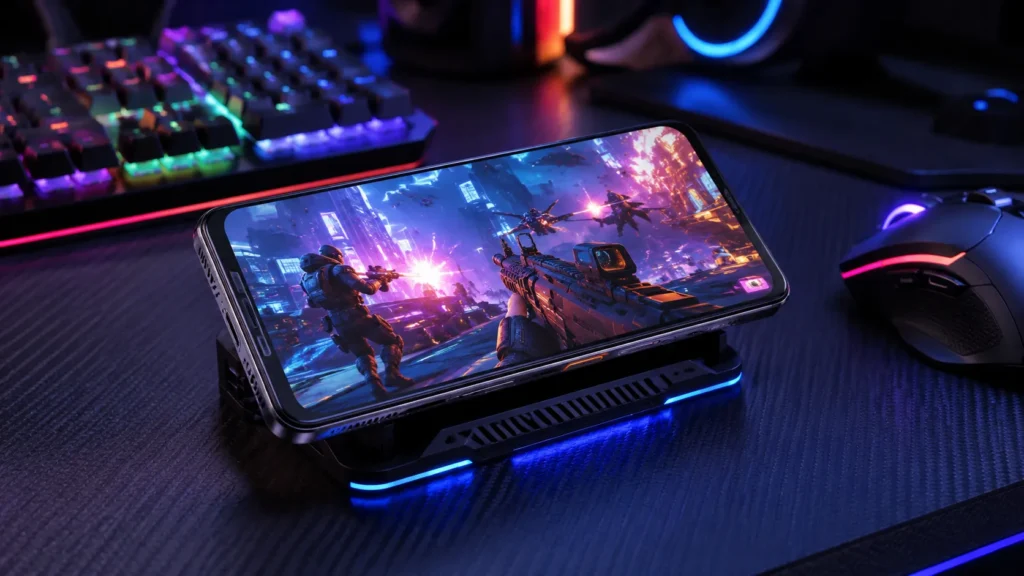
If you enjoy games like BGMI, Call of Duty: Mobile, Free Fire MAX, or Genshin Impact, don’t focus only on the processor.
Look for:
- Powerful GPU
- Efficient cooling system
- Stable frame rates
- High touch sampling rate
- Responsive gyroscope
- Large battery
- Stereo speakers
Phones designed for gaming also offer features like gaming modes, shoulder triggers, and vibration feedback for a better experience.
Software Experience
Software has a huge impact on how enjoyable a phone feels after months or years of use.
| Software | Highlights |
|---|---|
| Stock Android / Pixel UI | Clean interface, fast updates |
| One UI | Feature-rich and polished |
| OxygenOS | Smooth performance with useful customization |
| Nothing OS | Minimal design with unique visual features |
| HyperOS | Feature-packed ecosystem integration |
Software Updates
Choose brands that provide multiple years of Android version upgrades and regular security updates. Longer software support keeps your phone secure and useful for a longer time.
Bloatware
Some phones come with unnecessary pre-installed apps. A cleaner interface generally offers a better experience and more available storage.
AI Features

Artificial Intelligence is now a major selling point, but not every AI feature is equally useful.
Some of the most practical AI features include:
- AI photo enhancement
- AI object removal
- AI writing assistance
- Live translation
- AI voice transcription
- Circle to Search
- Smart search across apps
- On-device AI processing
Which AI Features Actually Matter?
The most useful AI features save time or improve daily tasks, such as editing photos, translating conversations, summarizing text, or searching information quickly. Flashy AI tools that you rarely use shouldn’t influence your buying decision.
Connectivity
Modern smartphones should support the latest connectivity standards for better speed and compatibility.
| Feature | Why It Matters |
|---|---|
| 5G | Faster mobile internet and future readiness |
| Wi-Fi 7 | Better wireless speeds on supported networks |
| Bluetooth 6 | Improved efficiency and audio performance |
| NFC | Contactless payments and quick pairing |
| USB-C | Universal charging and faster data transfer |
| eSIM | Convenient digital SIM activation |
| Satellite Connectivity | Emergency communication in remote areas (available on select premium models) |
Build Quality
A phone’s durability matters just as much as its performance.
Materials:
- Plastic: Lightweight and affordable.
- Glass: Premium appearance but more fragile.
- Metal: Strong and durable with a premium feel.
IP Rating: An IP rating provides protection against dust and water. Higher ratings generally offer better resistance, making the phone more durable for everyday use.
Gorilla Glass: Protective glass helps reduce scratches and improves resistance to accidental drops.
Weight & Design: A lighter phone is more comfortable to use for long periods, while balanced ergonomics often matter more than ultra-thin designs.
Common Mistakes People Make
Avoid these common buying mistakes:
- Choosing a phone only because of a high megapixel camera.
- Ignoring software update policies.
- Buying more RAM than you actually need.
- Overlooking display quality.
- Focusing only on charging speed.
- Ignoring processor performance.
- Buying a phone with insufficient storage.
- Paying extra for features you’ll never use.
- Forgetting to check after-sales service.
- Not reading long-term user reviews.
Best Smartphone Recommendations
| User Type | What to Look For |
|---|---|
| Students | Good battery, reliable processor, 128GB storage, affordable price |
| Gamers | Powerful chipset, advanced cooling, 120Hz display, large battery |
| Photography Enthusiasts | Large main sensor, OIS, quality ultra-wide and telephoto cameras |
| Battery-Focused Users | 6,000mAh or larger battery with efficient software optimization |
| Business Users | Strong security, long software support, reliable performance |
| Travelers | Excellent cameras, durable build, eSIM support, long battery life |
| Content Creators | Powerful processor, 4K video recording, ample storage, quality microphones |
| Budget Buyers | Balanced performance, AMOLED display, dependable battery, regular updates |
| Premium Buyers | Flagship processor, premium display, versatile cameras, extended software support |
Choose a phone based on your primary needs rather than simply buying the most expensive model. A mid-range smartphone often delivers the best overall value.
15 Expert Smartphone Buying Tips
- Decide your budget before comparing phones.
- Prioritize the processor over marketing claims.
- Don’t judge cameras by megapixels alone.
- Buy at least 128GB of storage.
- Choose 8GB RAM or more for long-term use.
- Prefer AMOLED displays whenever possible.
- Check software update commitments.
- Read real user reviews before purchasing.
- Compare battery life, not just battery size.
- Ensure the phone supports the connectivity features you need.
- Buy from brands with reliable service centers.
- Use a protective case and screen protector from day one.
- Avoid paying for features you won’t use.
- Compare overall value instead of individual specifications.
- Buy the phone that best fits your daily lifestyle.
📌 Read more:
- Xiaomi Redmi Note 17 Pro (Global): Price, Specs & Full Review
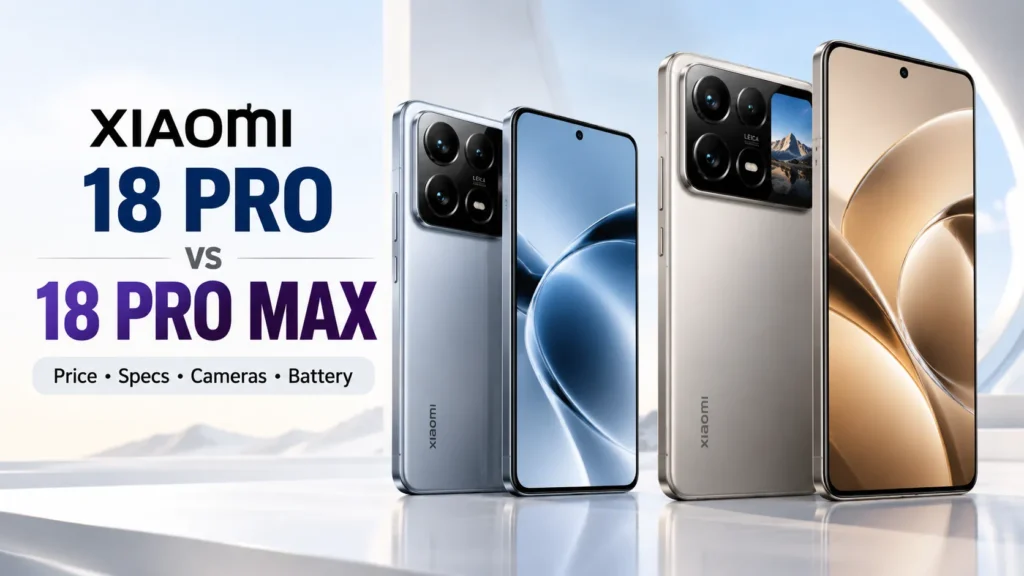
- Xiaomi 18 Pro vs Xiaomi 18 Pro Max: Price, Specifications, Features and Full Review
- Xiaomi 17T Review: 5x Leica Zoom Cameras, 6500mAh Battery
- Xiaomi 17 vs iPhone 17 – कौन Best है? Full Comparison 2026
- Xiaomi 17 Series, Launch Date 2026, Price, Specs & Features
- Vivo V60e 5G: 200MP Camera, Top 6500mAh Battery at ₹29,999
Frequently Asked Questions
Q1. Is 8GB RAM enough in 2026?
A1. Yes, for most users, 8GB RAM is sufficient for multitasking, gaming, and everyday apps.
Q2. Is 128GB storage enough?
A2. It is enough for many users, but 256GB is a better choice if you store lots of photos, videos, or games.
Q3. Which processor is best for gaming?
A3. Flagship Snapdragon and Apple chips generally offer the best gaming performance, while high-end MediaTek processors are also excellent.
Q4. Does a higher refresh rate improve everyday use?
A4. Yes. A 120Hz display makes scrolling, animations, and gaming feel much smoother.
Q5. Is a 200MP camera always better?
A5. No. Sensor size, image processing, and lens quality are often more important than megapixels.
Q6. Should I buy a phone with AI features?
A6. Yes, if the AI features improve tasks you perform regularly, such as photo editing or translation.
Q7. Is wireless charging necessary?
A7. Not for everyone. It’s convenient but not essential for most buyers.
Q8. Which display type is best?
A8. AMOLED offers the best balance of image quality, contrast, and efficiency for most users.
Q9. How many years of software updates should I expect?
A9. Aim for a phone that offers several years of Android updates and regular security patches.
Q10. What battery size is ideal?
A10. 5,000mAh battery is sufficient for most people, while heavy users may benefit from 6,000mAh or more.
Q11. Is an IP rating important?
A11. Yes. It adds protection against accidental exposure to dust and water.
Q12. Should I upgrade every year?
A12. Not necessarily. Most modern smartphones remain capable for several years with proper care.
📌 Discover more: Best Phone Under ₹15000 in India (2026)
Final Verdict: How to Choose Best Smartphone in 2026
Choosing the right smartphone in 2026 isn’t about buying the device with the biggest numbers on the spec sheet-it’s about finding one that fits your lifestyle and priorities. A balanced phone with a reliable processor, quality display, capable cameras, good battery life, and long software support will provide a better experience than a device that focuses on just one headline feature.
Start by setting a realistic budget and identifying your primary needs. Students and casual users may value affordability and battery life, while gamers should prioritize processing power, cooling, and display quality. Photography enthusiasts should focus on sensor quality, optical stabilization, and image processing rather than megapixels alone. Professionals and content creators will benefit from more storage, dependable performance, and extended software support.
Finally, think about the future. A phone that receives regular software updates, offers enough storage for your growing media library, and supports modern connectivity standards will continue to serve you well for years. By comparing the features that truly matter instead of getting distracted by marketing buzzwords, you can confidently choose a smartphone that delivers excellent value and a great everyday experience.
Disclaimer: Product prices, features, and specifications mentioned on this website may change without notice. Please check the official brand website or trusted retailers for the latest updates before making any purchase.
Related Posts
- Best Smartphones for Students in 2026: Battery, Performance, Camera and Value
- Xiaomi 18 Pro vs Xiaomi 18 Pro Max: Price, Specifications, Features and Full Review
- Apple Event iPhone 18 Pro and iPhone 18 Pro Max, iPhone Duo & Apple Watch Series 12, Apple Watch Ultra 4 and AirPods 5.
- POCO F9 Ultra Price, Specifications, Features and Full Review
- Best Camera Phones 2026: Top 5 Phones for Photography and Video
- Best Phones With 8000mAh Battery in 2026
- Google Pixel 11 vs Pixel 11 Pro vs Pixel 11 Pro Fold: Which Pixel Should You Buy?
- iPhone 18 Pro Everything We Know So Far About Apple iPhone 18 Pro 2026
Latest Phone
- Lava Virat Curve 5G
 ₹20,999
 - OnePlus N6 Lite 4G
 ₹16,999
 - AI+ Nova 2 Power 5G
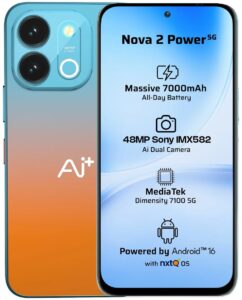 ₹16,999
 - Google Pixel 11
 ₹89,999

Aman is a content writer specializing in technology and automobile topics, including smartphones, gadgets, car reviews, and electric vehicles. He creates clear and informative articles that help readers understand the latest updates, features, and trends in a simple and reliable way.