
India’s electric-car market has changed significantly in 2026. Buyers with a budget of around ₹20 lakh no longer have to choose between a small city EV and a much more expensive premium electric SUV. The market now includes compact SUVs, family-oriented electric MPVs, SUV-coupes and even new long-range models.
But choosing the best EVs under ₹20 lakh is not simply a matter of finding the car with the biggest claimed range.
Battery size, charging speed, cabin space, safety, service support, warranty, highway usability and your ability to charge at home can matter just as much.
This guide focuses on EVs that genuinely fit a ₹20 lakh ex-showroom budget based on current 2026 pricing and available variants.
Quick Picks: Best EVs Under ₹20 Lakh
| Category | EV | Starting Price | Battery | Claimed Range |
|---|---|---|---|---|
| Best Overall | Tata Nexon.ev | ₹12.49 lakh | 45 kWh | 489 km |
| Best New-Gen Value | Kia Syros EV | ₹13.49 lakh | 42/51.4 kWh | Up to 526 km |
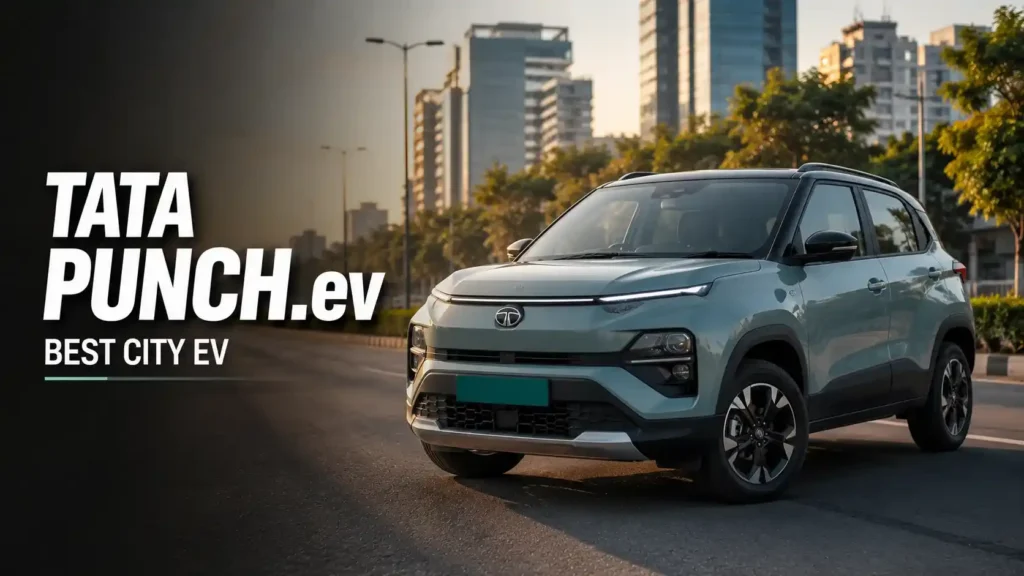
| Best City EV | Tata Punch.ev | ₹9.69 lakh | 30/40 kWh | Up to 468 km |
| Best Budget SUV | Mahindra XUV 3XO EV | ₹13.89 lakh | 39.4 kWh | 351 km MIDC |
| Best Family EV | MG Windsor EV | ₹13.99 lakh | 38 kWh / 52.9 kWh Pro | Up to 449 km |
| Best Long-Range SUV | Maruti e VITARA | ₹15.99 lakh | 49/61 kWh | Up to 543 km |
| Best Features | Tata Curvv.ev | ₹16.99 lakh | 45/55 kWh | Up to 502 km |
| Best Premium SUV | Hyundai Creta Electric | ₹18.02 lakh | 42/51.4 kWh | Up to 510 km |
| Best Large SUV at the Limit | Tata Sierra.ev | ₹18.79 lakh | 63/75 kWh | Up to 665 km |
| Best Alternative | VinFast VF6 | ₹18.19 lakh | 59.6 kWh | 463–468 km |
Prices are ex-showroom and can change. The ₹20 lakh cutoff refers to the vehicle price, not insurance, registration, accessories or charger installation.
📌 Read more:
- Tata Aeris 2026 Price, Specifications, Features, Variants and Mileage
- Mahindra XUV 3XO REVX EDGE Launched: Price, Features & Specs
- Tata Sierra Legend Series Launched: Price, Features and Variants
- Mahindra Thar Facelift 2026: Price, Features, Specifications and What’s New
- Tesla Cybercab Robotaxi Launches in Austin: Price, Features & How It Works
- Kia Sorento 2026 Price, Features, Specifications and Launch Detail
Top 10 EVs Under ₹20 Lakh in India 2026
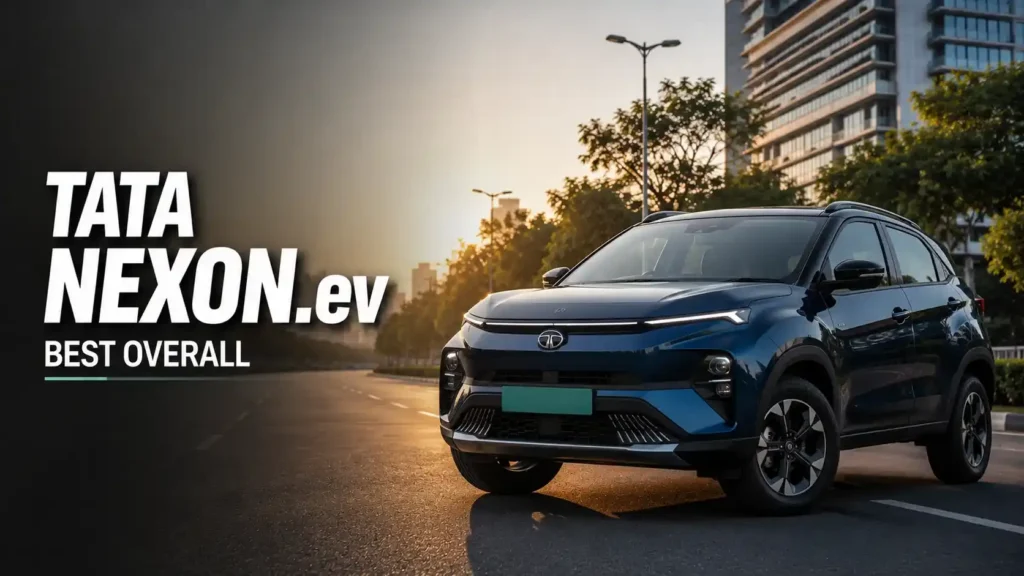
1. Tata Nexon.ev
Price
The Tata Nexon.ev starts at ₹12.49 lakh ex-showroom. The current 45-kWh Nexon.ev is comfortably within the ₹20 lakh budget. Tata lists the 45-kWh version with a 489-km MIDC Part 1 + Part 2 certified range.
Battery
The current long-range model uses a 45-kWh high-energy-density lithium-ion battery with a permanent-magnet synchronous motor producing 106 kW and 215 Nm.
Range
Official claimed range: 489 km MIDC.
Tata’s own C75 information gives an indicative 350–375 km C75 range for the 45-kWh Nexon.ev. This is useful context, but it should not be treated as a universal real-world figure for every driver.
Charging
The 45-kWh version supports:
- 7.2-kW AC wallbox charging
- 60-kW DC fast charging
- Approximately 40 minutes for 10–80% on a suitable DC charger
- Approximately 6 hours 36 minutes for 10–100% using the 7.2-kW wallbox
Performance
With 106 kW and 215 Nm, the Nexon.ev is quick enough for everyday city traffic and highway overtaking. Tata quotes 0–100 km/h in 8.9 seconds.
Interior & Comfort
The Nexon.ev is a practical five-seater SUV rather than a space-maximising family EV. Its upright shape makes it easier to use than many low-slung electric cars, while the 60:40 rear seat and useful cabin storage improve everyday usability.
Features
Depending on variant, buyers can get a large touchscreen, connected-car technology, panoramic sunroof, digital displays and other premium equipment.
Safety
The Nexon.ev has a 5-star Bharat NCAP rating, with 29.86/32 adult and 44.95/49 child occupant scores listed by Bharat NCAP.
Ownership
The 45-kWh Nexon.ev is covered by Tata’s lifetime HV battery warranty for qualifying private first owners, subject to the warranty terms. Tata defines “lifetime” as 15 years from first registration.
2. Kia Syros EV
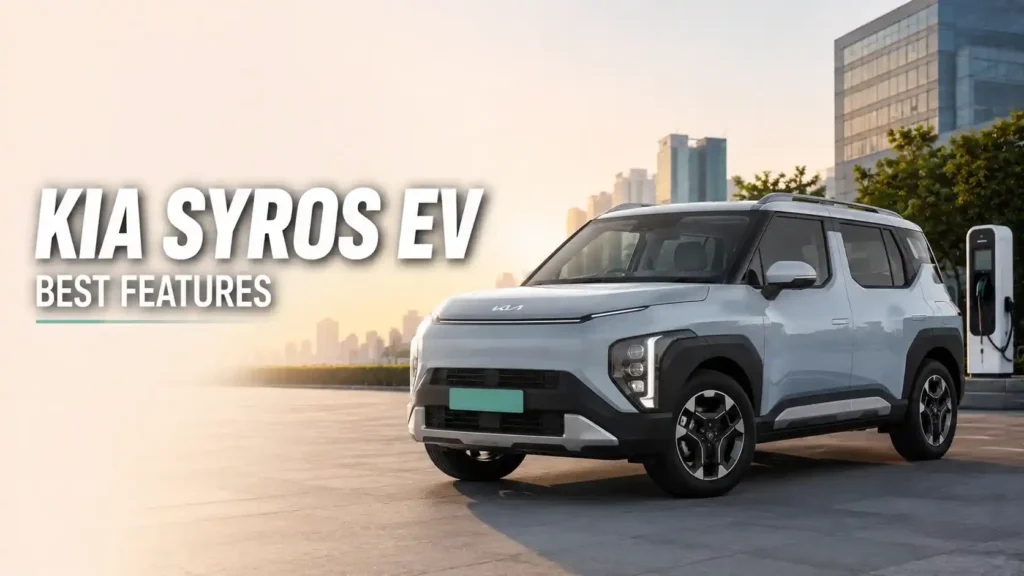
The Kia Syros EV is one of the most important new additions to the 2026 under-₹20-lakh EV market.
Price
The Syros EV launched at around ₹13.49 lakh ex-showroom, with the Extended Range variants reaching the ₹20 lakh mark. Current published variant pricing places the long-range versions below or around the ₹20 lakh ceiling.
Battery
Kia offers:
- 42-kWh battery
- 51.4-kWh Extended Range battery
The larger battery has an official claimed range of 526 km.
Range
The 42-kWh version is rated at around 443 km, while the 51.4-kWh version reaches 526 km according to current published specifications.
Charging
Kia quotes:
- 11-kW AC charging
- 100-kW DC fast charging
- 10–80% in approximately 39 minutes using a 100-kW DC charger
Performance
The long-range version produces up to 171 PS and 255 Nm according to Kia’s current launch specifications.
Interior & Comfort
The Syros EV uses a compact footprint but makes good use of interior space. Its cabin is aimed at buyers who want a modern, technology-heavy small SUV without moving into a much larger vehicle.
Features
Depending on variant, features include panoramic display technology, connected-car functions, ADAS, 360-degree camera, ventilated seats and V2L.
Safety
The Syros EV was newly launched in 2026, so buyers should check the exact applicable Bharat NCAP assessment and variant coverage before purchase. Do not assume that every available feature is standard on every trim.
Ownership
Kia provides an established dealer and service network, while the EV receives an 8-year/1.6-lakh-km high-voltage battery warranty.
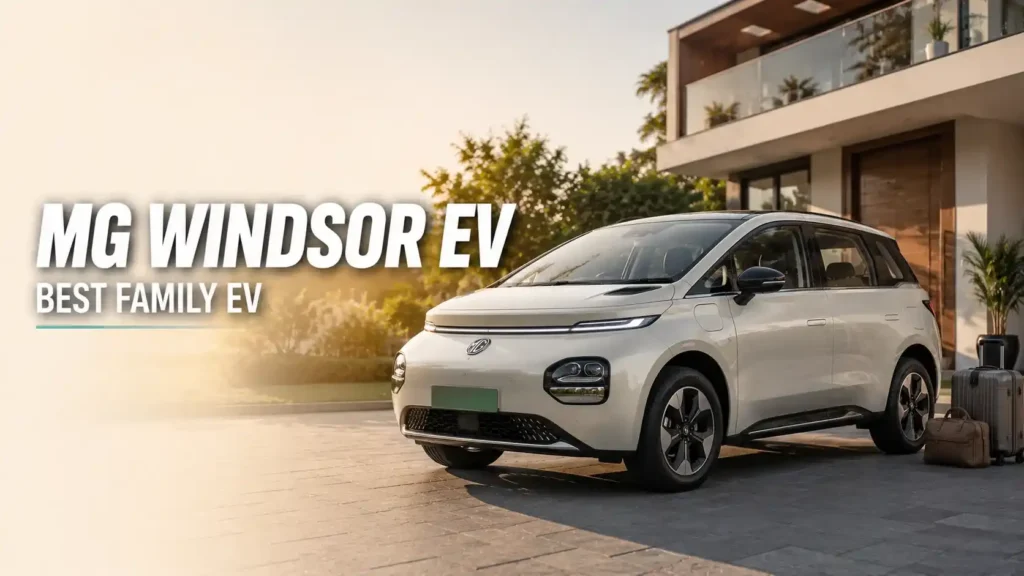
3. MG Windsor EV
Price
The Windsor EV currently starts at ₹13.99 lakh ex-showroom for the standard Excite variant. The larger-battery Pro versions are listed at approximately ₹17.38 lakh and ₹18.50 lakh depending on variant.
Battery
The standard Windsor uses a 38-kWh battery, while Windsor Pro versions use a 52.9-kWh battery.
The Pro battery provides a claimed 449-km MIDC range.
Charging
The Windsor Pro supports a 7.4-kW AC charger and MG states approximately 9.5 hours for 10–100%. DC charging from 20–80% takes around 50 minutes using a suitable 60-kW charger.
Performance
The Windsor produces 136 PS and 200 Nm, with a front-mounted permanent-magnet synchronous motor.
Interior & Comfort
This is where the Windsor makes a strong case. Its long wheelbase and lounge-like rear seats make it particularly attractive to family buyers.
Features
Depending on variant:
- Large central touchscreen
- Connected-car features
- Panoramic glass roof
- Ventilated front seats
- 360-degree camera
- V2L
- Level 2 ADAS on the Essence Pro
Safety
It has six airbags, ESP and a broad electronic safety package. Buyers should verify the latest crash-test applicability for the exact variant before publication or purchase.
Ownership
MG offers a lifetime battery warranty under its applicable programme, with conditions varying by ownership and usage.
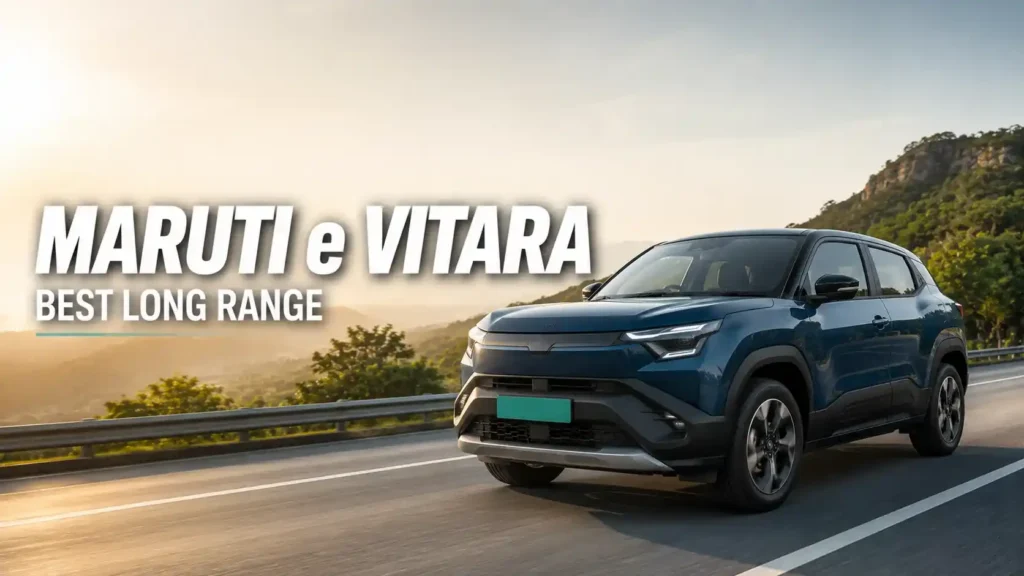
4. Maruti Suzuki e VITARA
Price
The e VITARA is currently priced from ₹15.99 lakh to ₹19.79 lakh ex-showroom. The three main variants are Delta 49 kWh, Zeta 61 kWh and Alpha 61 kWh.
The Alpha dual-tone version crosses the ₹20 lakh threshold, so it should not be counted when using a strict ₹20-lakh limit.
Battery
The e VITARA offers:
- 49-kWh battery
- 61-kWh battery
Maruti quotes up to 543 km of certified range for the 61-kWh version.
Range
The 61-kWh battery is the version to choose if range is a priority.
Charging
A 7.4-kW AC wallbox is offered, while Maruti has also developed its “e for me” charging ecosystem.
Performance
The e VITARA is tuned more toward smooth, efficient everyday driving than outright acceleration.
Interior & Comfort
The cabin is well suited to family use, with a conventional SUV layout and sliding/reclining rear-seat functionality. It is not the largest cabin in this group, however.
Features
Higher trims offer:
- Level 2 ADAS
- Connected technology
- Digital displays
- Premium audio
- Panoramic-style technology and convenience features
Safety
The e VITARA has a 5-star Bharat NCAP rating, scoring 31.49/32 for adult protection and 43/49 for child protection. Bharat NCAP lists applicability to the 49-kWh Delta and 61-kWh Zeta/Alpha variants.
Ownership
Battery warranty is 8 years/1.6 lakh km, whichever comes first. Maruti has also stated that its EV support network includes more than 1,500 EV-ready service centres.
5. Tata Curvv.ev
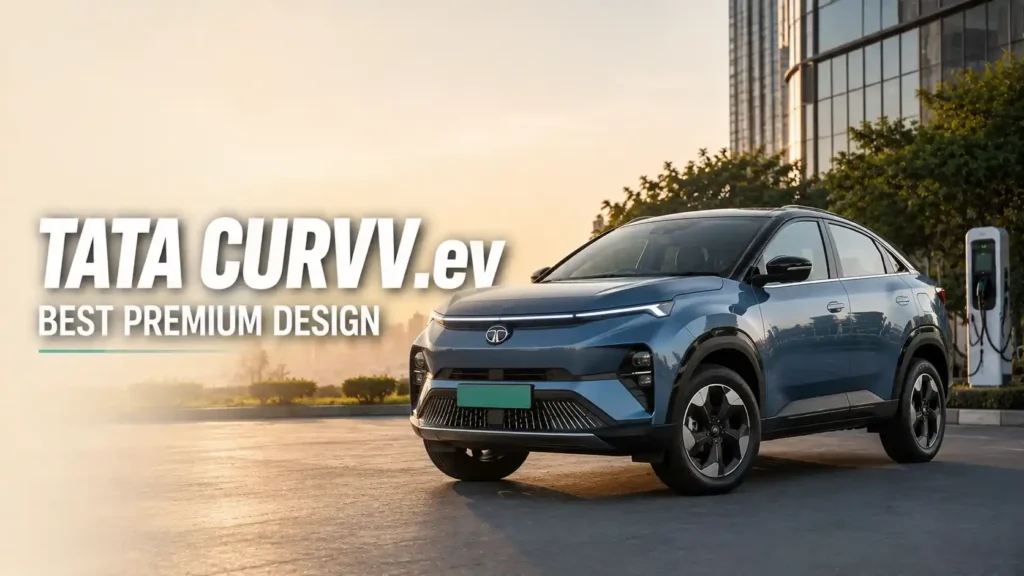
Price
The current Curvv.ev Series X range starts at ₹16.99 lakh and reaches ₹19.49 lakh ex-showroom. The Accomplished X 55 starts at ₹16.99 lakh, while the feature-rich Empowered X 55 is ₹19.19 lakh before the Dark Edition premium.
Battery
The Curvv.ev offers:
- 45-kWh battery
- 55-kWh battery
The 55-kWh version is rated at 502 km MIDC.
Charging
The 55-kWh version supports a 7.2-kW AC wallbox and 70-kW DC fast charging, with 10–80% taking around 40 minutes under stated conditions.
Performance
The 55-kWh version produces 123 kW/167 PS and 215 Nm.
Interior & Comfort
Its 500-litre boot is a major advantage. The sloping roof gives it a more stylish profile than the Nexon while retaining useful family practicality.
Features
Higher variants can include:
- Level 2 ADAS
- Panoramic sunroof
- Ventilated seats
- 360-degree camera
- JBL audio
- V2L/V2V
- Powered tailgate
Safety
The Curvv.ev has a 5-star Bharat NCAP rating, with 30.81/32 adult and 44.83/49 child protection scores.
Ownership
Tata provides lifetime HV battery warranty coverage for eligible private first owners of the Curvv.ev.
📌 Read more:
- Why Maruti Suzuki Victoris 2025 is a Smart & Perfect Choice
- Volvo EX30 2025 Review: Price, Range, Features & India Launch
- Volkswagen Tayron Review: A Premium 7-Seater SUV with Powerful Performance
- Volkswagen Taigun Review 2026 – Real Experience, Price & Worth Buying or Not?
- VinFast VF6 and VF7 – New Electric SUVs Launched in India
- Upcoming SUVs in India 2025: Amazing Tata, Renault & Nissan
6. Hyundai Creta Electric
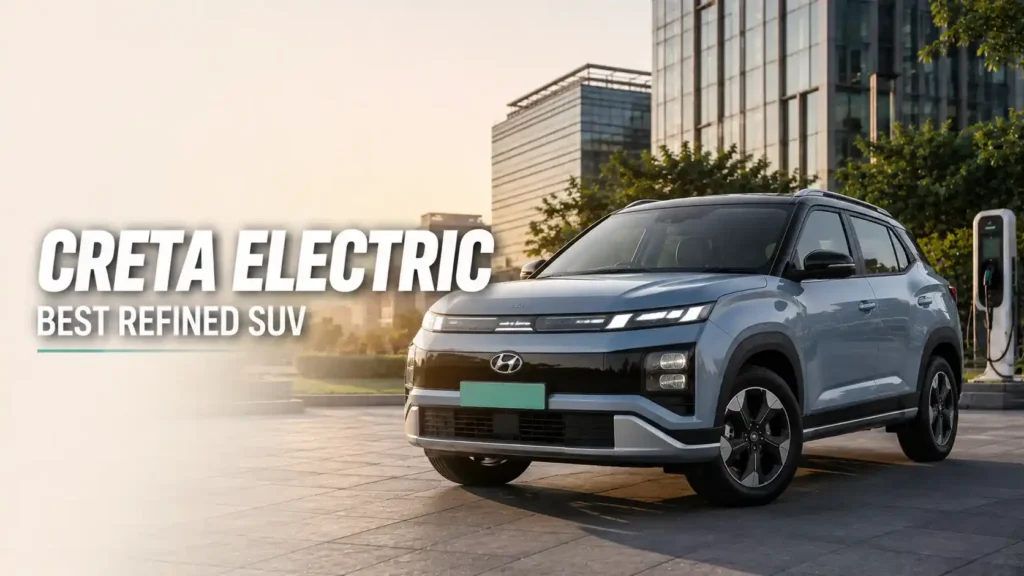
Price
Hyundai currently lists the Creta Electric from ₹18.02 lakh ex-showroom, while the full range extends to ₹24.70 lakh. Therefore, only the lower-priced variants qualify for this guide; the higher trims are outside the ₹20 lakh budget.
Battery
There are two battery options:
- 42 kWh
- 51.4 kWh
The 42-kWh version produces 99 kW/135 PS, while the 51.4-kWh version produces 126 kW/171 PS.
Range
The official figures are:
- 42 kWh: 420 km
- 51.4 kWh: 510 km
Charging
Hyundai quotes CCS2 charging, with 7.4-kW AC charging and DC fast charging capable of bringing the battery from 10–80% in around 39 minutes under specified conditions.
Performance
The long-range battery provides considerably stronger performance than the 42-kWh version.
Interior & Comfort
This is one of the Creta Electric’s strongest areas. It combines a familiar SUV cabin with a relatively premium dashboard, comfortable seating and good everyday usability.
Features
Depending on variant:
- ADAS
- Connected technology
- V2L
- Digital displays
- Ventilated seats
- Panoramic roof
- Advanced driver assistance
Safety
Hyundai provides a substantial active-safety package, but buyers should check the exact variant’s safety equipment rather than assuming all ADAS features are standard.
Ownership
Hyundai has a nationwide dealer network, which is an important advantage for first-time EV buyers.
7. Tata Sierra.ev
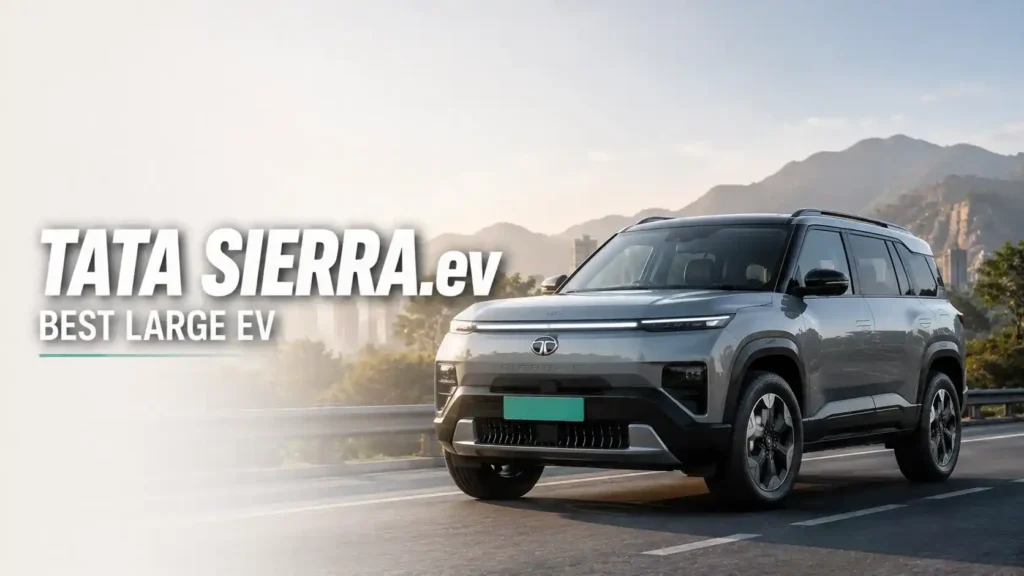
Price
The Sierra.ev starts at ₹18.79 lakh ex-showroom, placing its entry version inside the ₹20 lakh budget. The overall Sierra.ev range extends well above ₹20 lakh, so buyers must choose the qualifying entry configuration carefully.
Battery
The Sierra.ev is available with:
- 63-kWh battery
- 75-kWh battery
- 75-kWh QWD dual-motor configuration
Tata lists claimed MIDC ranges of 535 km, 665 km and 624 km, respectively.
Range
The 75-kWh RWD version has the headline 665-km MIDC range, but that configuration is not necessarily within the ₹20 lakh budget.
The 63-kWh version is therefore the relevant starting point for a strict budget buyer.
Charging
Charging capability varies by configuration. Buyers should check the exact battery and charger package before booking.
Performance
Higher QWD versions produce up to 306 PS and 504 Nm, but these are not the versions to consider when applying a strict ₹20-lakh cap.
Interior & Comfort
The Sierra is larger and more spacious than the Curvv and Nexon. It is aimed at buyers who want a proper family SUV experience.
Features
The Sierra can offer:
- Panoramic roof
- Large touchscreen
- Digital cockpit
- JBL audio
- 360-degree camera
- ADAS on higher variants
- V2L/V2V-related EV functionality depending on variant
Safety
The Sierra has a 5-star Bharat NCAP rating, with 31.14/32 adult and 44.73/49 child protection scores.
Ownership
Tata lists lifetime HV battery warranty coverage for qualifying private first owners of the Sierra.ev.
8. Mahindra XUV 3XO EV
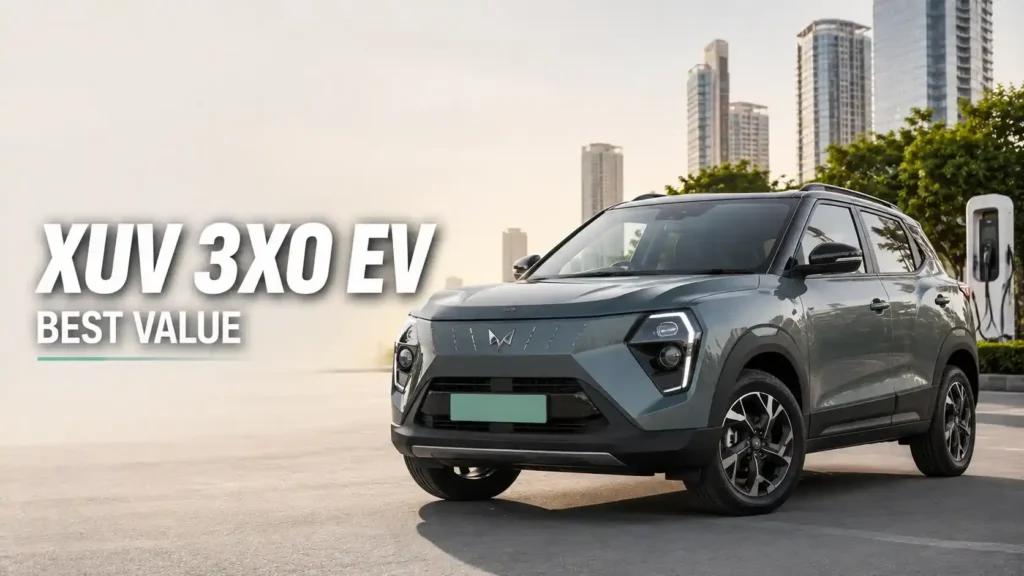
Price
The XUV 3XO EV launched at ₹13.89 lakh, with the top AX7L at ₹14.96 lakh ex-showroom. Both variants are comfortably below ₹20 lakh.
Battery
It uses a 39.4-kWh battery and a 110-kW/150-PS electric motor producing 310 Nm.
Range
Mahindra’s current technical data lists a 351-km MIDC Part 1 + Part 2 range. Mahindra’s launch communication also quoted up to 285 km of real-world range based on its own testing.
Charging
- CCS Type II
- 7.2-kW AC charging
- Around 6.5 hours for 0–100% with 7.2-kW AC
- Around 50 minutes for 0–80% using a 50-kW DC charger
Interior & Features
The XUV 3XO EV offers a strong technology package, including dual displays, connected technology, ADAS on the AX7L, Harman Kardon audio and a 360-degree camera.
Safety
It is equipped with six airbags, ESC and advanced driver assistance features on the higher trim. A specific Bharat NCAP EV rating should not be assumed simply from the ICE XUV 3XO rating.
Ownership
Mahindra lists an 8-year/1.6-lakh-km battery and motor warranty and 3 years/unlimited-km vehicle warranty.
9. Tata Punch.ev
Price
The current Punch.ev range starts at ₹9.69 lakh and goes to ₹12.59 lakh ex-showroom, with 30-kWh and 40-kWh battery choices.
Battery & Range
The 40-kWh version offers:
- 40-kWh LFP battery
- 468-km ARAI/MIDC claimed range
- Tata C75 range of approximately 335–355 km
Charging
Tata quotes 20–80% charging in approximately 26 minutes for the 40-kWh version under specified conditions.
Interior
The Punch is compact but practical for city families. It is easier to park and manoeuvre than larger SUVs.
Safety
The current Punch has a 5-star Bharat NCAP result, with 30.58/32 adult and 45/49 child protection scores in the current rating data.
📌 Discover more: EV vs Petrol Cars in India: Which Saves More Money in 2026?
All Best EVs under ₹20 lakh Comparison
| EV | Price | Battery | Claimed Range | Power | DC Charging | Boot |
|---|---|---|---|---|---|---|
| Punch.ev | ₹9.69–12.59L | 30/40 kWh | Up to 468 km | Not stated here | 20–80% ~26 min | Practical compact boot |
| XUV 3XO EV | ₹13.89–14.96L | 39.4 kWh | 351 km MIDC | 150 PS | 0–80% ~50 min | 364L |
| Nexon.ev | ₹12.49L+ | 45 kWh | 489 km | 106 kW | 10–80% ~40 min | Practical |
| Syros EV | ₹13.49L–₹20L | 42/51.4 kWh | Up to 526 km | Up to 171 PS | 10–80% ~39 min | Not stated here |
| Windsor EV | ₹13.99L+ | 38/52.9 kWh | Up to 449 km | 136 PS | ~20–80% 50 min Pro | 604L |
| e VITARA | ₹15.99–19.79L | 49/61 kWh | Up to 543 km | Not stated here | Fast charging supported | Practical SUV |
| Curvv.ev | ₹16.99–19.49L | 45/55 kWh | Up to 502 km | 167 PS | ~40 min | 500L |
| Creta Electric | ₹18.02L+ | 42/51.4 kWh | Up to 510 km | Up to 171 PS | ~39 min 10–80% | Practical SUV |
| Sierra.ev | ₹18.79L+ | 63/75 kWh | Up to 665 km | Up to 306 PS | Variant dependent | Large SUV |
| VF6 | ₹18.19L+ | 59.6 kWh | 463–468 km | 130/150 kW | 10–70% ~25 min | 423L |
Best EV for Different Buyers
Best Overall: Tata Nexon.ev
It offers the strongest balance of price, safety, range, charging and ownership support.
Best for Families: MG Windsor EV
Its spacious rear cabin and comfort-oriented design make it particularly family-friendly.
Best for City Driving: Tata Punch.ev
Compact dimensions are a genuine advantage in crowded Indian cities.
Best for Highway Use: Tata Curvv.ev / Sierra.ev
The larger batteries and SUV proportions make them better suited to mixed city-highway usage.
Best Long-Range EV: Tata Sierra.ev
The 75-kWh RWD version’s 665-km MIDC figure is the highest in this group, although that higher specification is above the ₹20-lakh entry point.
Best Features: Kia Syros EV
The combination of ADAS, connected technology, premium equipment and fast charging makes it a technology-heavy choice.
Best Value: Mahindra XUV 3XO EV
Its price-performance equation is difficult to ignore.
Best First-Time EV: Maruti e VITARA
The combination of familiar brand support, safety and range reduces some of the uncertainty for EV newcomers.
Best Daily Commuter: Tata Punch.ev
Low purchase price and compact dimensions make it especially logical for urban users.
Best for Tech Lovers: Kia Syros EV
Its displays, ADAS, connected features and charging capability give it a strong technology focus.
Real-World Range: What Should You Expect?
Never buy an EV based only on the number printed in the brochure. Official range tests are conducted under controlled certification conditions. Actual range can change because of:
- Highway speed
- Traffic
- Air-conditioner use
- Weather
- Driving style
- Passenger and luggage weight
- Terrain
- Tyre pressure
- Battery temperature
For example, Tata’s own C75 data gives a useful indication of how certification figures can differ from a controlled real-world-oriented test. The Nexon.ev 45 is rated at 489 km MIDC but Tata lists a C75 range of approximately 350–375 km. The Curvv.ev 55 is rated at 502 km MIDC with a C75 range of around 400–425 km.
That does not mean every owner will achieve those numbers. The safest approach is to calculate your expected daily distance and keep a sensible charging buffer.
📌 Discover more:Best EVs Under ₹20 Lakh in India 2026: Top Budget EV Cars
EV Charging Guide
Home Charging
For regular EV ownership, home charging is the biggest convenience advantage. A 7.2- or 7.4-kW wallbox can recharge many medium-size EVs overnight. This is much easier than visiting a public charger every few days.
Apartment buyers should check:
- Parking-space electricity access
- Meter arrangement
- Society permission
- Cable routing
- Charger installation
- Electrical load availability
Public Charging
DC fast chargers are mainly useful for highway trips or emergency top-ups. Charging speed depends on both the charger and the car. A 150-kW charger does not automatically mean the car will charge at 150 kW.
Tata’s charging guidance, for example, categorises public charging from slower AC charging to high-power CCS2 DC chargers, while actual charging time depends on battery state, temperature and charger output.
What If You Cannot Charge at Home?
Think carefully before buying. An EV without convenient home or workplace charging can still work, but ownership becomes more dependent on public infrastructure. If you regularly have to drive to a charging station, wait for the car and return home, some of the convenience advantage of an EV disappears.
EV Running Cost: Illustrative Example
Consider a driver covering 1,000 km per month. Assume, purely for illustration:
- EV efficiency: 6 km/kWh
- Charging losses: 10%
- Electricity cost: ₹8/kWh
- Petrol efficiency: 15 km/l
- Petrol price: ₹100/litre
- EV electricity requirement: 1,000 ÷ 6 = 166.7 kWh
- Including 10% charging losses: 166.7 ÷ 0.90 ≈ 185 kWh
- Estimated electricity cost: 185 × ₹8 ≈ ₹1,480/month
- Petrol car: 1,000 ÷ 15 = 66.7 litres
- At ₹100/litre: ≈ ₹6,670/month
- Illustrative difference: ≈ ₹5,190/month
These are not universal ownership costs. Actual savings depend on electricity tariffs, public-charging prices, charging losses, petrol prices, vehicle efficiency, traffic and driving style.
EV Maintenance
EVs generally have fewer traditional powertrain components than petrol or diesel vehicles. There is no conventional engine oil, spark-plug system or multi-speed engine transmission to service. However, EVs still require attention to:
- Tyres
- Brakes
- Suspension
- Steering
- Air-conditioning
- Cooling systems
- Battery thermal management
- Software
- 12V battery
- Wipers and other consumables
Regenerative braking can reduce conventional brake usage, but tyres and suspension still experience normal road wear.
Battery Warranty & Long-Term Ownership
Do not simply ask a dealer, How many years is the battery warranty? Ask:
- How many years?
- How many kilometres?
- Is it transferable?
- Is there a minimum state-of-health threshold?
- What happens if battery capacity falls below that threshold?
- Are commercial registrations treated differently?
- What happens after the first owner sells the vehicle?
For example, Tata’s lifetime battery policy specifies a 70% state-of-health threshold and different conditions for first and subsequent owners.
Kia’s Clavis EV policy, meanwhile, specifies 8 years/1.6 lakh km for its high-voltage battery, with capacity coverage linked to the battery falling below 70%. The headline warranty number is therefore only part of the story.
EV Safety: Look Beyond Airbags
Airbag count alone does not tell you whether an EV is safe. Buyers should examine:
- Bharat NCAP/Global NCAP results
- ESC
- Seat-belt systems
- Structural performance
- Child protection
- ADAS
- Pedestrian protection
- Battery protection
Bharat NCAP currently lists 5-star results for several EVs in this guide, including the Punch.ev, Nexon.ev, Curvv EV, e VITARA and Sierra. The VinFast VF6 is also listed with a 5-star Bharat NCAP result.
However, a crash-test result applies to specific tested configurations and applicable variants. Always check the rating’s applicability before assuming it covers a newly introduced trim.
EV vs Petrol Alternatives
An EV is not automatically the right answer. A petrol car may make more sense if you:
- Drive very few kilometres
- Frequently travel to areas without charging
- Need fast refuelling
- Change cars frequently
- Have no home charging
An EV becomes more attractive when you:
- Drive regularly
- Have home/work charging
- Keep the vehicle for several years
- Mostly drive in cities
- Want lower energy costs
📌 Discover more: Tata Harrier Stealth Edition & Tata Safari Stealth Edition
Common Mistakes When Buying an EV
1. Buying only because of claimed range
A 500-km claimed range does not guarantee 500 km in daily driving.
2. Ignoring charging access
Home charging is often more important than another 50 km of claimed range.
3. Choosing the highest variant unnecessarily
A ₹19.99-lakh EV may not offer enough extra value over a ₹17-lakh version.
4. Ignoring battery warranty
Look at both duration and capacity coverage.
5. Ignoring service availability
A technically excellent EV is less attractive if authorised support is far away.
6. Comparing only purchase price
Include insurance, charger installation, electricity, public charging and financing.
7. Ignoring insurance
EV insurance can differ substantially from comparable petrol cars.
8. Ignoring highway usage
A city EV may be excellent at commuting but inconvenient for repeated 500-km journeys.
9. Assuming every fast charger is equally fast
The car’s maximum charging rate matters as much as the charger’s advertised output.
Should You Buy an EVs Under ₹20 Lakh in 2026?
Buy an EV if:
- You drive regularly
- Most journeys are urban or mixed
- You can charge conveniently
- You want lower energy costs
- You plan to keep the car for several years
Consider Petrol or Hybrid if:
- You frequently make long-distance trips
- Home charging is unavailable
- You need five-minute refuelling
- Your annual mileage is very low
- The EV’s upfront price does not work financially
The correct question is not Are EVs better than petrol cars?
It is: Does an EV fit the way I actually use my car?
📌 Read more:
- 2025 Hyundai Aura SX: Ultimate Review of Features & Mileage
- Best EVs Under ₹20 Lakh in India 2026: Top Budget EV Cars
- Big Savings: Toyota Cars Get Cheaper in India After GST 2.0
- BMW X6 M60i xDrive Launched in India: Price, Features, V8 Performance & Full Review
- EV vs Petrol Cars in India: Which Saves More Money in 2026?
- EVs Under ₹20 Lakh Comparison, Top Electric SUVs Feature, Price & Range
Frequently Asked Questions
Q1. Which is the best EVs under ₹20 lakh in 2026?
A1. The Tata Nexon.ev is one of the strongest overall choices because it combines price, safety, range and practical ownership.
Q2. Which EVs under ₹20 lakh has the longest claimed range?
A2. The Tata Sierra.ev family reaches up to 665 km MIDC, but the higher-range variants are above the ₹20 lakh entry budget. Among models more directly available around this price, the Maruti e VITARA and Kia Syros EV offer strong range figures.
Q3. Which EV is best for families?
A3. The MG Windsor EV is particularly strong because of its spacious, comfort-focused rear cabin. Larger options such as the Sierra.ev are worth considering if budget permits.
Q4. Which EV is best for city driving?
A4. The Tata Punch.ev is an excellent urban choice because of its compact dimensions and relatively low price.
Q5. How much does it cost to charge an EV at home?
A5. There is no single answer. Multiply the electricity consumed by your local per-unit electricity tariff. Charging losses should also be considered.
Q6. Can I buy an EV without home charging?
A6. Yes, but you should first check the availability and reliability of public chargers around your home, workplace and regular routes.
Q7. Are EVs cheaper to maintain than petrol cars?
A7. Generally, EVs have fewer conventional powertrain maintenance requirements, but tyres, suspension, brakes, cooling systems and electronics still require servicing.
Q8. How long does an EV battery last?
A8. There is no single universal lifespan. Battery durability depends on chemistry, thermal management, charging behaviour, climate, usage and warranty conditions.
Q9. What should I check before buying an EV?
A9. Check the exact variant price, battery, claimed range, charging speed, warranty, service network, home-charger installation and crash-test rating.
Q10. Is an EV worth buying for highway driving?
A10. It can be, particularly with a larger battery and reliable DC charging network. Frequent highway users should plan charging stops before purchase.
Q11. Is a 500-km claimed EV really capable of 500 km?
A11. Not necessarily. Official certification tests are controlled conditions. Actual range can be lower depending on speed, temperature, AC usage, traffic and load.
Q12. Is a larger battery always better?
A12. No. A larger battery provides more stored energy, but vehicle efficiency also matters. A lighter and more efficient EV can achieve similar range with a smaller battery.
Q13. Should I buy the biggest battery variant?
A13. Only if your driving requires it. If you mostly drive 30–50 km daily and charge at home, paying substantially more for a larger battery may not be necessary.
Q14. Is fast charging important for city driving?
A14. Usually less important than home charging. Fast charging becomes much more useful for highway trips and unexpected long-distance driving.
Q15. Should I buy an EV or hybrid in 2026?
A15. It depends on your charging access and driving pattern. A hybrid can be more convenient for long-distance users, while an EV can provide lower energy costs for regular users with easy charging.
Final Verdict: Which Is the Best EVs Under ₹20 Lakh?
The best EVs under ₹20 lakh in India in 2026 is not one single car for every buyer.
For an all-round purchase, the Tata Nexon.ev 45 kWh remains one of the strongest choices. It combines a 489-km claimed range, 5-star Bharat NCAP rating, practical SUV dimensions and a lifetime HV battery warranty for eligible private first owners. It is the sensible choice when you want a little bit of everything without stretching the budget.
For value, the Mahindra XUV 3XO EV is difficult to ignore. Its ₹13.89–14.96 lakh price range, 150-PS motor and strong technology package make it particularly attractive for city-focused buyers.
For city driving, the Tata Punch.ev is the easier recommendation. It is compact, affordable and available with a 40-kWh battery, making it a good first step into electric ownership.
For families, the MG Windsor EV stands out because of its cabin comfort and rear-seat space. Buyers who need an even larger SUV can consider the entry-level Tata Sierra.ev, although the higher Sierra configurations quickly move beyond the ₹20-lakh limit.
For long range, the Maruti e VITARA offers a particularly attractive combination of a 61-kWh battery, up to 543-km certified range, 5-star Bharat NCAP safety and a large service footprint. The Kia Syros EV is another important choice, especially for buyers who want high technology and up to 526 km of claimed range at a relatively competitive price.
The Tata Curvv.ev is the better choice for buyers who want style and premium features without leaving the ₹20-lakh bracket, while the Hyundai Creta Electric makes more sense for buyers who value refinement and Hyundai’s established ownership ecosystem.
Ultimately, don’t choose your EV from a specification table alone.
Start with your daily kilometres, then check whether you have home or workplace charging. After that, consider highway usage, family space, battery warranty and the variants you can actually afford.
A ₹16-lakh EV that perfectly matches your driving pattern can be a much better purchase than a ₹20-lakh EV with a larger battery that you rarely need.
Disclaimer: Product prices, features, and specifications mentioned on this website may change without notice. Please check the official brand website or trusted retailers for the latest updates before making any purchase.
Related Posts
- Tata Aeris 2026 Price, Specifications, Features, Variants and Mileage
- Mahindra XUV 3XO REVX EDGE Launched: Price, Features & Specs
- Tata Sierra Legend Series Launched: Price, Features and Variants
- Mahindra Thar Facelift 2026: Price, Features, Specifications and What’s New

- Tesla Cybercab Robotaxi Launches in Austin: Price, Features & How It Works
- Kia Sorento 2026 Price, Features, Specifications and Launch Detail
- Toyota Hilux 2026 Review, Price, Features, Performance & Should You Buy It?
- EVs Under ₹20 Lakh Comparison, Top Electric SUVs Feature, Price & Range
Latest Bike
- Jawa 42 All Stars Launched in India: Price, Specs & Features

- Electric Bike vs Petrol Bike: Pros, Cons & Ownership Cost 2026
- Tesla Balance Bike for Kids: Price, Features, Specifications & Why It Sold Out Instantly
- Yamaha Aerox E Price, Range, Features, Specifications & Review
- Revolt RVX Review 2026: Price, Range, Specifications, Features & Is It Worth Buying?

Abdul Azeem is a content writer covering automobiles, smartphones, gadgets, and electric vehicles. He writes informative and easy-to-understand articles focused on the latest launches, features, comparisons, and technology updates for everyday readers.