
Last Updated: July 25, 2026
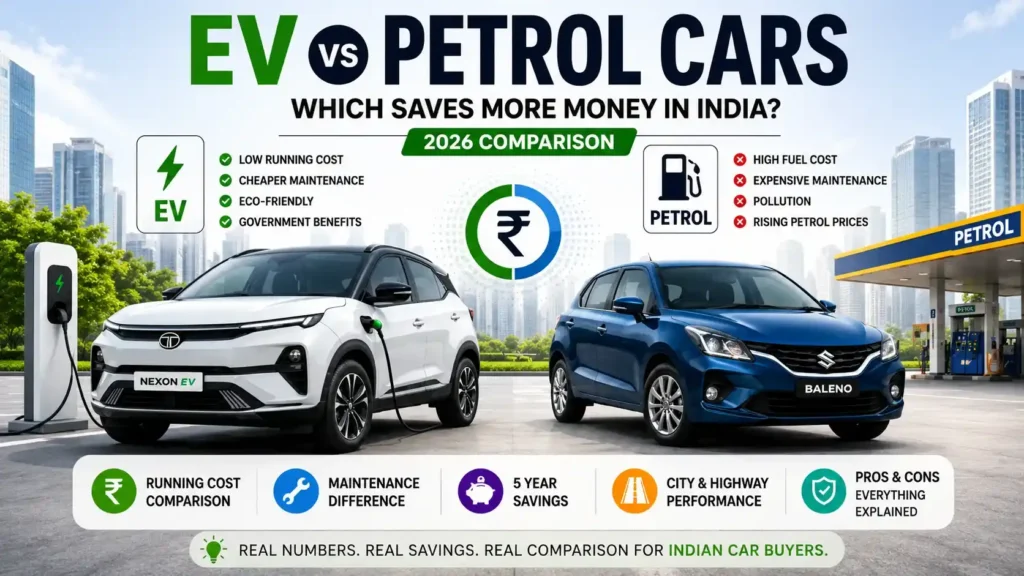
If you’re planning to buy a car in India in 2026, chances are you’ve already had this debate in your head: Should I buy an EV or stick with a petrol car?
A few years ago, electric cars still felt futuristic for most Indian buyers. But now things are changing fast. Charging stations are increasing, EV prices are slowly becoming reasonable, and petrol prices still refuse to calm down. At the same time, many Indian families still hesitate before buying an EV because of:
- charging anxiety,
- battery replacement fears,
- highway range concerns,
- and resale value uncertainty.
Meanwhile, petrol cars continue to feel safe and familiar. You can refill almost anywhere in India within five minutes and continue driving without thinking too much. So which one actually saves more money in real Indian conditions?
- Not just on paper.
- Not just in advertisements.
- But in actual day-to-day ownership.
That’s what we’re going to discuss in this detailed guide about EV vs Petrol Cars in India. This article is written from a practical Indian buyer’s perspective – especially for:
- middle-class families,
- office commuters,
- city drivers,
- and budget-conscious car buyers.
Because honestly, buying a car in India is not just an emotional decision anymore. It’s also a financial calculation.
Understanding the Real Cost of Owning a Car in India
Many buyers make one major mistake: They only compare showroom prices. But the actual cost of owning a car includes:
- fuel or charging expense,
- maintenance,
- insurance,
- service costs,
- battery health,
- resale value,
- and long-term running expense.
A cheaper car can actually become more expensive after 5 years if its running cost is too high. That’s exactly why EVs are becoming attractive. Their upfront cost is still higher in many cases, but the running cost is dramatically lower.
EV vs Petrol Cars – Purchase Price Comparison
Let’s start with the biggest reality check about EV vs Petrol cost comparison India. Petrol Cars Are Still Cheaper to Buy. In 2026, a petrol hatchback or compact SUV is usually cheaper than an equivalent EV. For example:
| Segment | Petrol Car Price | EV Price |
|---|---|---|
| Hatchback | ₹6-9 lakh | ₹9-13 lakh |
| Compact SUV | ₹10-15 lakh | ₹14-20 lakh |
That price difference still matters for Indian middle-class buyers between EV vs Petrol Cars. A family buying their first car often focuses heavily on EMI affordability. And honestly, this is where petrol cars still have a major advantage.
📌 Read more:
- Best Smartphones for Students in 2026: Battery, Performance, Camera and Value
- Xiaomi 18 Pro vs Xiaomi 18 Pro Max: Price, Specifications, Features and Full Review
- Apple Event iPhone 18 Pro and iPhone 18 Pro Max, iPhone Duo & Apple Watch Series 12, Apple Watch Ultra 4 and AirPods 5.
- POCO F9 Ultra Price, Specifications, Features and Full Review
- Best Camera Phones 2026: Top 5 Phones for Photography and Video
- Best Phones With 8000mAh Battery in 2026
Why EV Prices Feel Expensive
EVs cost more mainly because:
- batteries are expensive,
- newer technology increases cost,
- and production scale is still developing.
However, this disparity is lessened by tax breaks and government subsidies.
Some states in India also offer:
- road tax exemptions,
- registration discounts,
- and purchase incentives.
Still, upfront pricing remains one of the biggest reasons many Indians continue buying petrol cars.
EV vs Petrol Cars Running Cost Comparison Per Kilometer
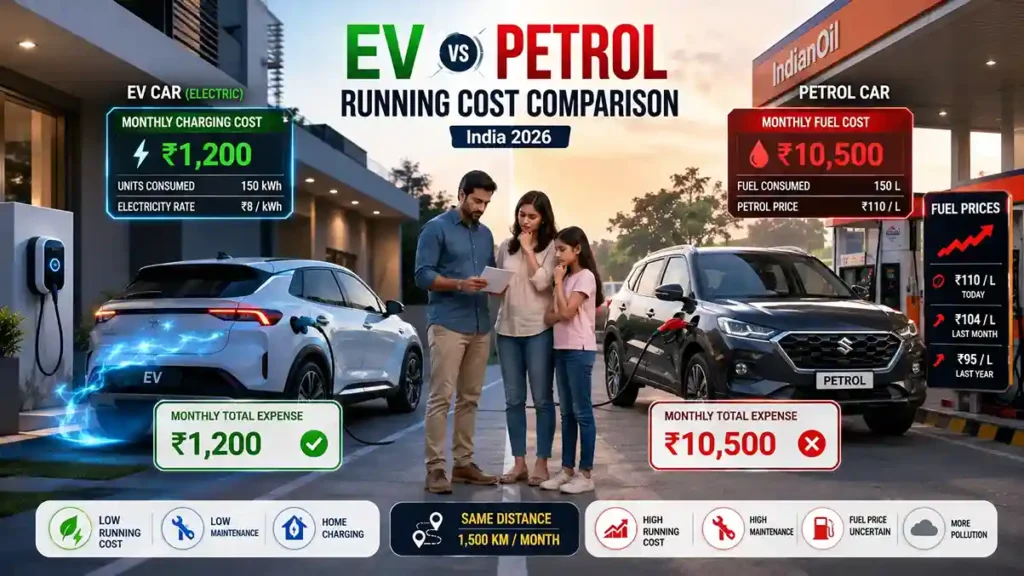
This is where EVs completely change the conversation.
Petrol Car Running Cost
Let’s assume:
- petrol price = ₹110/litre
- mileage = 16 km/l
Cost per kilometer: ₹110 ÷ 16 = roughly ₹6.8/km
Now imagine daily commuting. If you drive:
- 50 km daily,
- monthly driving = around 1500 km
Monthly petrol expense: 1500 × ₹6.8 = ₹10,200/month. That’s a serious monthly expense.
EV Running Cost Per Kilometer
Now let’s compare an EV. Suppose electric car running cost India:
- electricity rate = ₹8/unit
- EV efficiency = 7 km per unit
Cost per kilometer: ₹8 ÷ 7 = roughly ₹1.1/km
Monthly charging expense: 1500 × ₹1.1 = ₹1,650/month. That difference is massive.
Real-World Cost Comparison: EV vs Petrol Cars
| Type | Monthly Running Cost |
|---|---|
| Petrol Car | ₹10,200 |
| EV | ₹1,650 |
- Monthly savings: Around ₹8,500+
- Yearly savings: More than ₹1 lakh for heavy users.
This is exactly why office commuters and city drivers are increasingly shifting toward EVs.
Charging Cost vs Petrol Expense
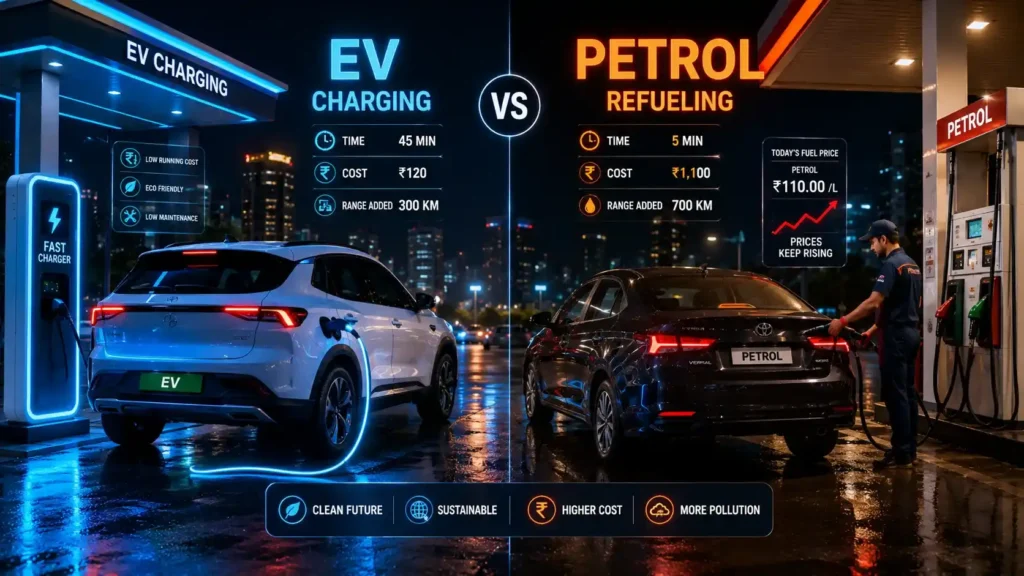
One thing many buyers don’t realize: Home charging is where EV savings become huge.
Home Charging Is Extremely Cheap
- Most EV owners charge overnight at home.
- For daily office commuting:
- charging cost often feels similar to running a ceiling fan and AC together.
That’s why EV owners usually stop worrying about fuel prices completely.
Public Fast Charging Costs More
Fast chargers on highways cost significantly more than home charging. Still cheaper than petrol overall, but: not as cheap as home charging. That’s important to understand before buying an EV.
Petrol vs Electric Car Maintenance
This is another area where EVs surprise many people.
Petrol Cars Have More Moving Parts
Petrol engines include:
- engine oil,
- clutch systems,
- gearbox components,
- filters,
- spark plugs,
- exhaust systems.
All of these require maintenance. Regular servicing becomes unavoidable.
EVs Need Less Maintenance
EVs are mechanically simpler.
No:
- engine oil,
- clutch,
- gearbox maintenance,
- or exhaust repairs.
That means:
- fewer service visits,
- lower annual maintenance,
- and less long-term headache.
Average Maintenance Comparison: EV vs Petrol Cars
| Vehicle Type | Average Annual Maintenance |
|---|---|
| Petrol Car | ₹10,000 – ₹25,000 |
| EV | ₹4,000 – ₹10,000 |
This becomes a major advantage over 5 years.
Battery Replacement Reality
This is probably the biggest fear among Indian EV buyers. What happens when the battery dies? Honestly, battery replacement is expensive. But there’s also a lot of misunderstanding around this topic.
Modern EV Batteries Last Longer Than Most People Think
Most EV manufacturers now provide:
- 8-year battery warranty,
- or around 1.6 lakh km coverage.
- For average Indian users:
- that’s a very long time.
- If someone drives: 12,000 km yearly,
then reaching 1.6 lakh km can take more than 13 years. So for many buyers, battery replacement may never even happen during ownership.
Long-Term Savings After 5 Years
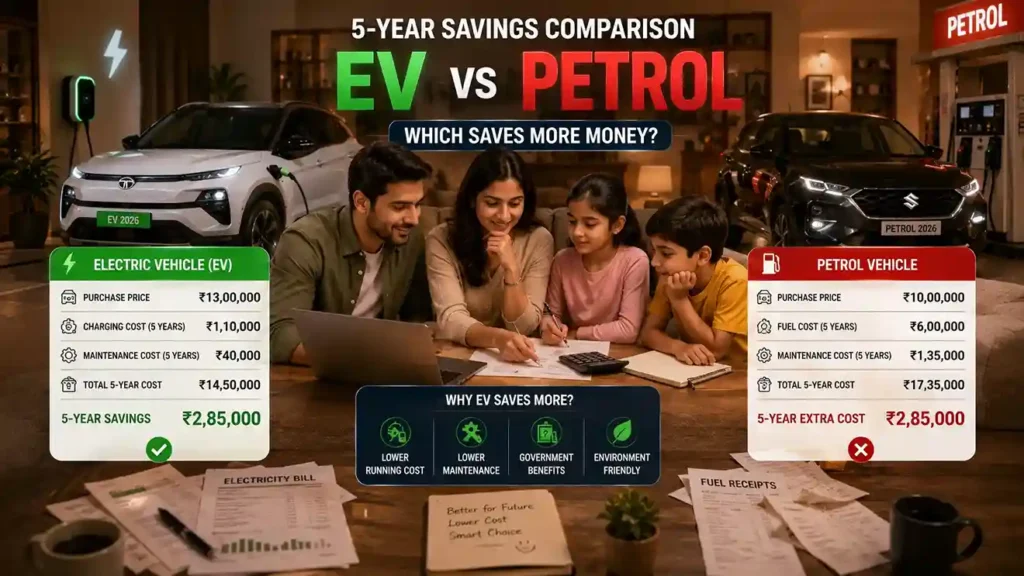
Now let’s do a realistic ownership comparison in EV vs Petrol Cars.
Petrol Car Example
| Purchase Price | ₹10 lakh |
| Monthly Fuel Cost | ₹10,000 |
| 5-Year Fuel Expense | ₹6 lakh |
| Maintenance (5 years) | ₹80,000 |
| Total Ownership Cost | Around ₹16.8 lakh |
EV Car Example
| Purchase Price | ₹13 lakh |
| Monthly Charging Cost | ₹1,700 |
| 5-Year Charging Expense | Around ₹1 lakh |
| Maintenance | ₹35,000 |
| Total Ownership Cost | Around ₹14.3 lakh |
Total Savings Difference
- Despite higher upfront cost: EV still saves roughly ₹2-3 lakh over 5 years.
- And for heavy daily commuters: the savings can become even bigger.
Which Car Is Better for City Driving?
This is where EVs honestly feel perfect.
Why EVs Shine in Cities
Indian city traffic is terrible. Constant:
- braking,
- crawling traffic,
- stop-and-go movement.
Petrol cars waste fuel heavily in these conditions. EVs handle city traffic much better because:
- torque delivery is instant,
- no gear shifts,
- silent driving,
- smoother experience.
Once you drive an EV in daily traffic, normal petrol automatics often feel outdated.
Parking and Home Charging Matter
If you:
- live in an apartment without charging,
- or cannot install home charging,
then EV ownership becomes more difficult. That’s a practical reality many YouTube reviewers ignore.
Which Car Is Better for Highway Travel?
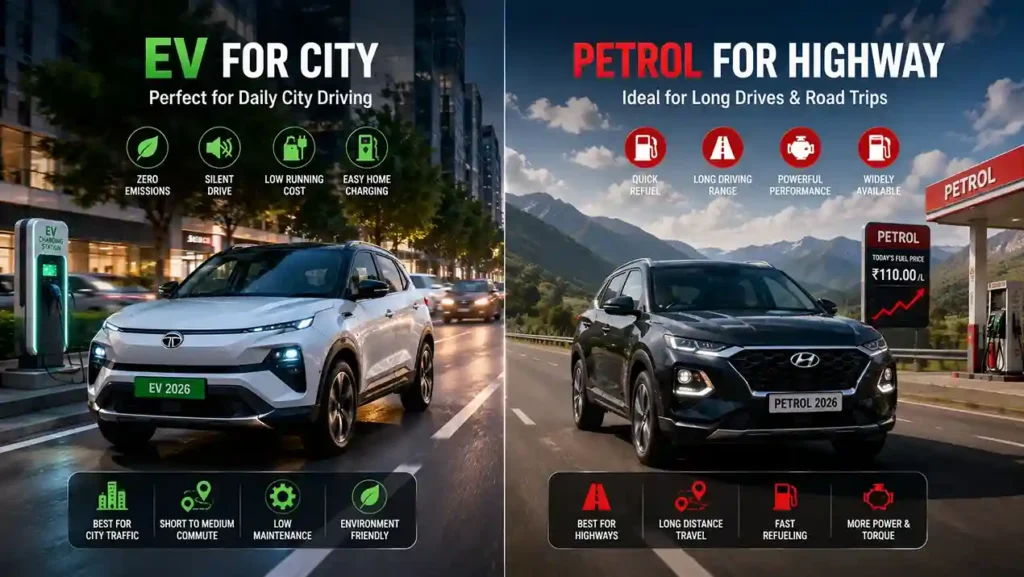
This is where petrol cars still feel more convenient.
Petrol Cars Win for Long Trips
In India, gasoline and diesel vehicles are still preferred for highway travel due to:
- fuel stations are everywhere,
- refueling takes minutes,
- long range is stress-free.
You don’t need:
- charging planning,
- route calculations,
- or range anxiety.
EV Highways Are Improving – But Slowly
Charging networks have improved massively compared to a few years ago. But depending on:
- location,
- highway route,
- and charger availability,
the experience can still feel inconsistent.
- For occasional highway trips: modern EVs are manageable.
- For frequent long-distance driving: petrol still feels easier.
EV Charging Problems in India
Let’s be realistic. India’s EV charging infrastructure is becoming better, but it is still not flawless.
Common EV Problems Buyers Face
Apartment Charging Issues
Many apartment societies still don’t support easy charger installation.
Charger Availability
- Public chargers are not equally available everywhere.
- Metro cities are much better compared to smaller towns.
Broken Chargers
Sometimes chargers:
- don’t work properly,
- are occupied,
- or charge slower than expected.
These situations still frustrate EV owners occasionally.
Hidden Costs Most Buyers Ignore
Some costs buyers forget while comparing cars:
Insurance Cost
EV insurance can sometimes be slightly higher.
Fast Charger Installation
Home wall-box charger setup may add: ₹30,000–₹70,000 depending on house wiring.
Tyre Wear
- EVs are heavier because of batteries.
- That can increase tyre wear slightly.
Government Subsidies & Tax Benefits
Government support still plays a big role in EV affordability.
Benefits Available in Many States
Depending on your state, benefits may include:
- lower registration cost,
- road tax exemption,
- subsidy incentives,
- income tax benefits on EV loans.
These reduce overall ownership cost significantly.
Best Budget EVs in India Right Now
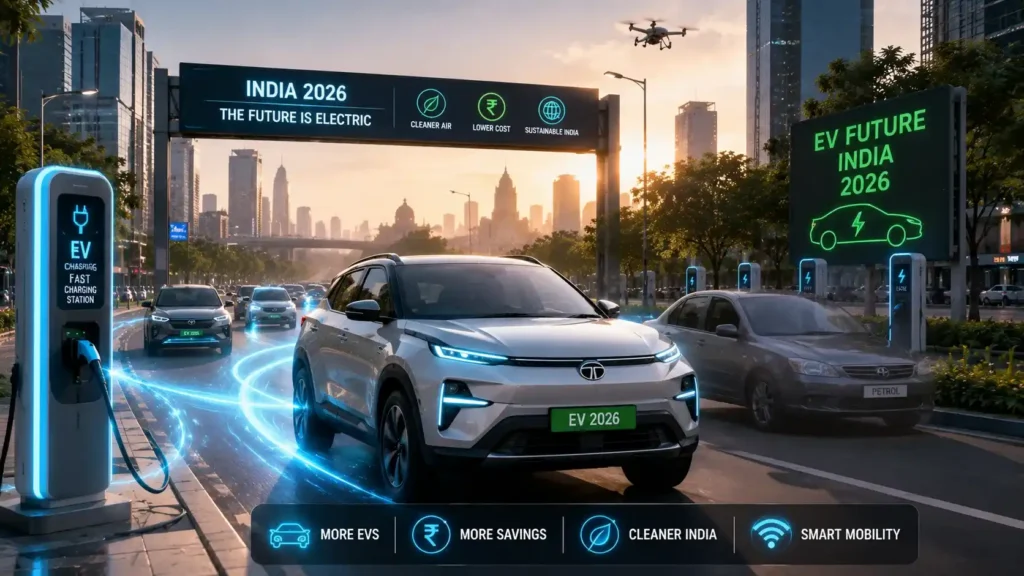
For Indian households, certain EVs now make real sense.
Popular Family-Friendly EV Choices
- Tata Punch EV: Excellent city car with practical pricing.
- MG Windsor EV: Comfortable family-oriented EV.
- Tata Nexon EV: Still one of the most balanced EVs in India.
- Mahindra XUV.e8: Modern feature-rich option with strong road presence.
Pros & Cons of EV Cars
Pros
- Extremely low running cost
- Lower maintenance
- Smooth city driving
- Silent cabin
- Instant acceleration
- Environment-friendly
- Saves money over long term
Cons
- Higher upfront price
- Charging infrastructure still developing
- Long charging time
- Battery replacement fear
- Range anxiety on highways
Pros & Cons of Petrol Cars
Pros
- Lower purchase price
- Easier refueling
- Better highway convenience
- Strong resale confidence
- Service network everywhere
Cons
- High fuel cost
- Higher maintenance
- Increasing petrol prices
- More engine wear over time
- Less efficient in city traffic
EV vs Petrol Cars Comparison Table
| Feature | EV Car | Petrol Car |
|---|---|---|
| Running Cost | Very low | High |
| Service Cost | Lower | Higher |
| City Driving | Excellent | Good |
| Highway Convenience | Improving | Excellent |
| Refueling Time | Slow charging | Very fast |
| Maintenance | Simple | More complex |
| Noise Level | Silent | Engine noise |
| Range Anxiety | Possible | Rare |
| Resale Value | Still evolving | More stable |
| Environmental Impact | Lower emissions | Higher pollution |
Who Should Buy an EV?
You should seriously consider an EV if:
- you drive daily in city traffic,
- office commute exceeds 40 km/day,
- you can install home charging,
- you want lower monthly expenses,
- you plan long-term ownership.
For city users, EVs now genuinely make financial sense.
Who Should Still Buy a Petrol Car?
Petrol cars are still smarter for:
- frequent highway travelers,
- people in smaller towns,
- buyers without home charging,
- occasional drivers,
- families wanting lowest upfront cost.
For some users, petrol still feels more practical. And honestly, that’s perfectly okay.
Real-World Indian Perspective on EV vs Petrol Cars
Many Indian buyers think EVs automatically save money for everyone. That’s not true.
If you:
- drive only occasionally,
- travel long highway distances often,
- or lack charging access,
then EV savings reduce significantly.
But if you:
- drive daily,
- spend heavily on petrol every month,
- and mainly use your car inside the city,
EV ownership can genuinely feel transformational financially.
📌 Read more:
- Xiaomi Redmi Note 17 Pro (Global): Price, Specs & Full Review
- Xiaomi 18 Pro vs Xiaomi 18 Pro Max: Price, Specifications, Features and Full Review
- Xiaomi 17T Review: 5x Leica Zoom Cameras, 6500mAh Battery
- Xiaomi 17 vs iPhone 17 – कौन Best है? Full Comparison 2026
- Xiaomi 17 Series, Launch Date 2026, Price, Specs & Features
- Vivo V60e 5G: 200MP Camera, Top 6500mAh Battery at ₹29,999
📌 Discover more: Tata Punch Facelift 2026 vs Tata Punch EV 2026
FAQs on EV vs Petrol Cars
Q1. Is EV really cheaper in India?
A1. Yes, especially for daily commuters. Running and maintenance costs are significantly lower compared to petrol cars.
Q2. How much does EV charging cost monthly?
A2. For average city users driving around 1200–1500 km monthly: charging cost often stays between ₹1,500–₹3,000.
Q3. Is EV good for long drives?
A3. Modern EVs are improving for highway travel, but petrol cars still remain more convenient for frequent long-distance driving.
Q4. What happens after battery life ends?
A4. Battery performance gradually reduces over many years. Most EVs now come with long battery warranties, reducing ownership anxiety.
Q5. Are petrol cars still worth buying in 2026?
A5. Absolutely. Petrol cars still make sense for:
- highway users,
- occasional drivers,
- and buyers wanting lower upfront cost.
Final Verdict – Which Saves More Money in India?
So finally: EV or petrol cars – which saves more money in India?
For City Users & Office Commuters
EVs clearly win. The savings in:
- fuel,
- maintenance,
- and daily running costs
- become huge over time.
For Budget Families
- If your monthly driving is high: EVs can reduce long-term expenses massively.
- But if your usage is low: a petrol car may still be financially smarter.
For Highway Travelers
Petrol cars still feel more practical and stress-free in 2026.
For Long-Term Ownership
EVs now offer stronger value if:
- you keep cars for many years,
- and mostly drive in urban areas.
At the end of the day, the best choice depends less on technology and more on your lifestyle. For many Indian families in 2026: EVs are no longer just futuristic gadgets. They are becoming practical money-saving machines. But petrol cars still remain reliable, flexible, and easier for many buyers across India. The smartest decision is choosing the car that matches your daily life – not just the latest trend.
Read More: Volkswagen Taigun Review 2026 – Real Experience,
Disclaimer: Product prices, features, and specifications mentioned on this website may change without notice. Please check the official brand website or trusted retailers for the latest updates before making any purchase.
Related Posts
- OPPO K15s vs K15x Price, Specifications, 8,000mAh Battery and Key Differences
- OnePlus 16 vs iPhone 18 Pro vs Galaxy S26 Ultra: Specifications, Camera, Performance and Battery Compared

- iPhone 18 Pro vs POCO F9 Ultra: Which Flagship Should You Buy?

- iPhone Duo Fold vs Samsung Galaxy Z Fold 8 Ultra: Which Foldable Is Better?

- Google Pixel 11 vs Pixel 11 Pro vs Pixel 11 Pro Fold: Which Pixel Should You Buy?

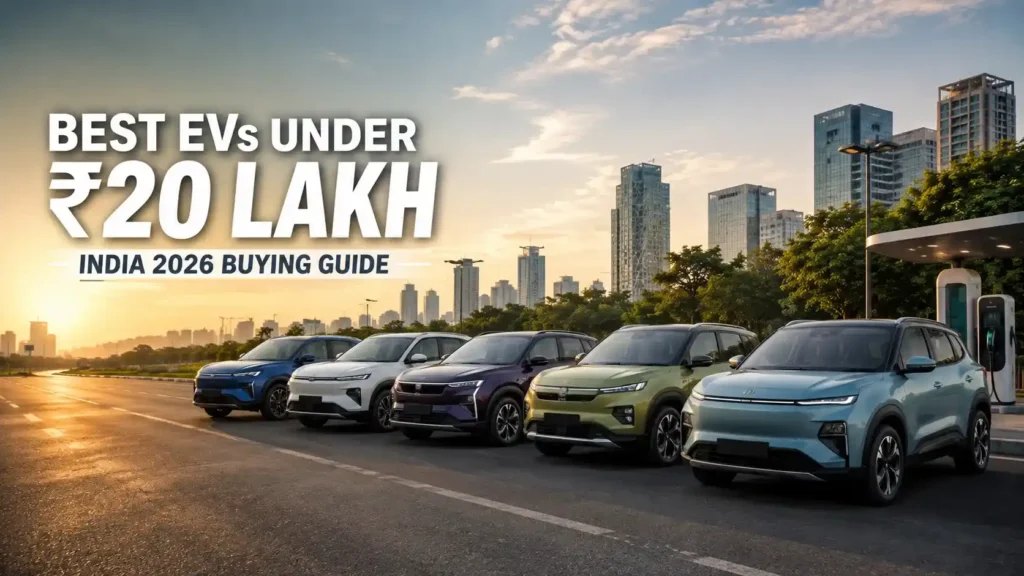
- EVs Under ₹20 Lakh Comparison, Top Electric SUVs Feature, Price & Range
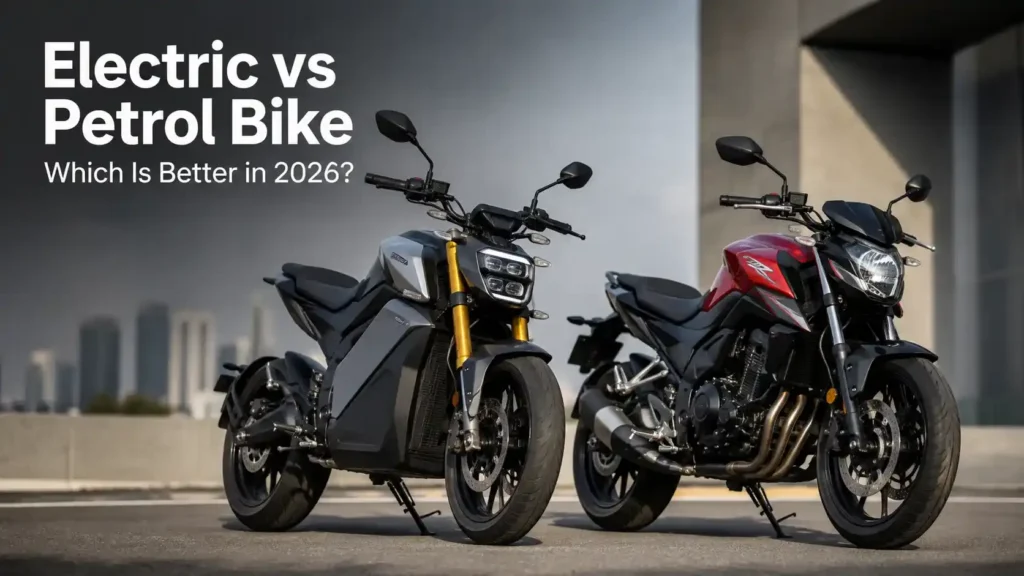
- Electric Bike vs Petrol Bike: Pros, Cons & Ownership Cost 2026
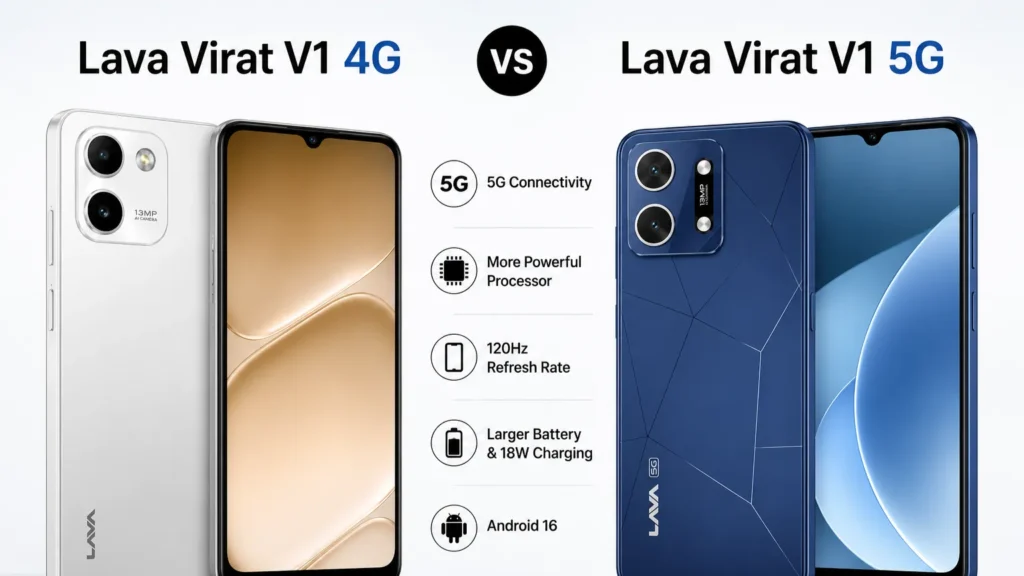
- Lava Virat V1 4G vs Lava Virat V1 5G
Laptop Lava Mahindra OnePlus Oppo Samsung Skoda Tata Tecno Vivo Volkswagen Xiaomi
Latest Phone
- Lava Virat Curve 5G
 ₹20,999
 - OnePlus N6 Lite 4G
 ₹16,999
 - AI+ Nova 2 Power 5G
 ₹16,999
 - Google Pixel 11
 ₹89,999

Abdul Azeem is a content writer covering automobiles, smartphones, gadgets, and electric vehicles. He writes informative and easy-to-understand articles focused on the latest launches, features, comparisons, and technology updates for everyday readers.